🥇 Gold Slides as Higher Energy Prices and Treasury Yields Offset Softer US Inflation
📈 Technical Analysis of XAU/USD
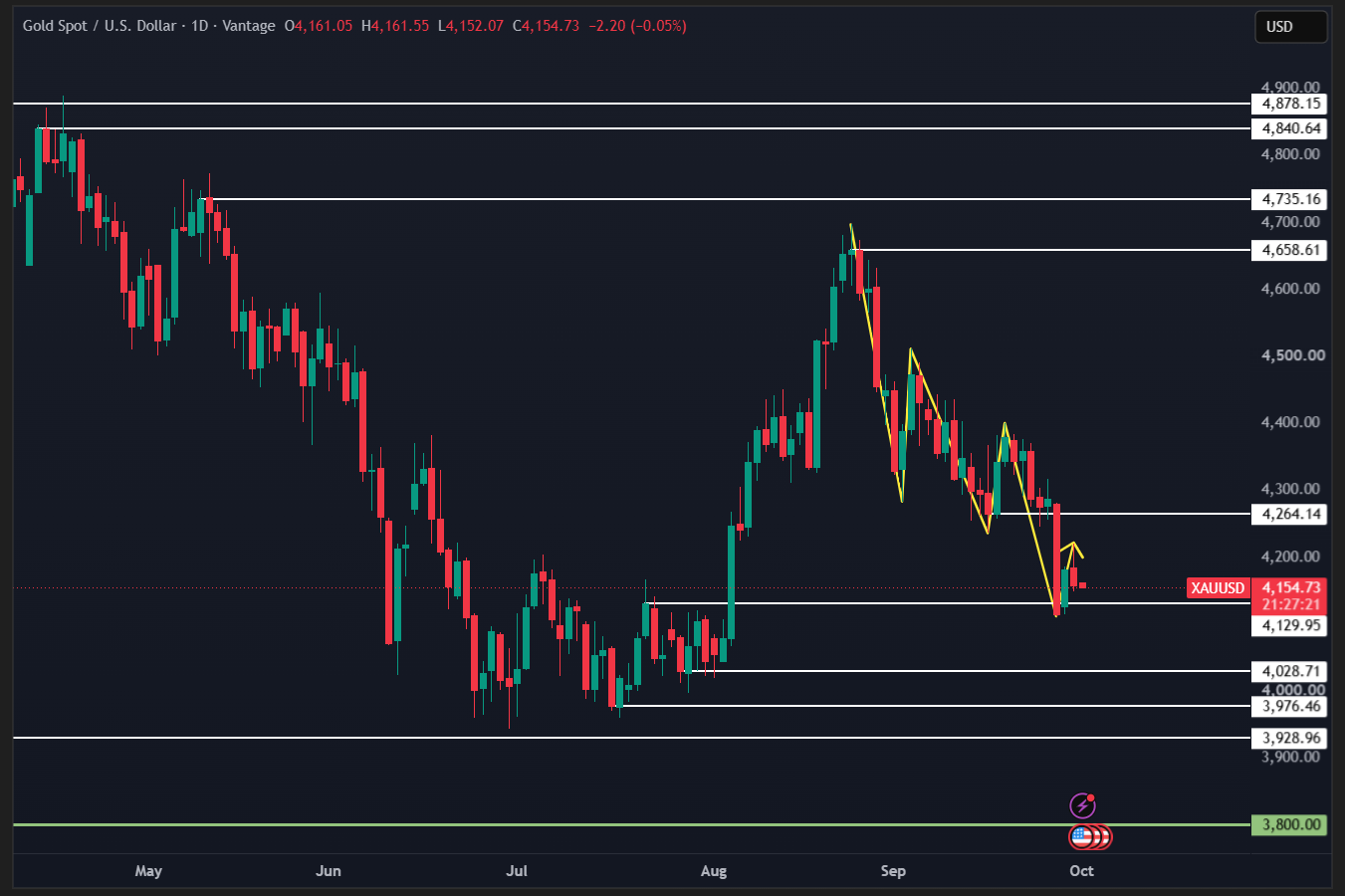
XAU/USD remains under pressure near 4,155–4,160 following its sharp breakdown, although buyers briefly defended the 4,130 region and generated a modest intraday recovery.
RSI (14) at 39 reflects bearish momentum, but remains above oversold territory, indicating that sellers retain momentum while further downside remains technically possible.
MACD remains bearish, with the expanding negative histogram indicating that downside momentum continues to build.
The broader technical structure remains firmly bearish: gold continues to trade below the 20, 50, 100 and 200 EMAs, leaving multiple layers of technical resistance overhead. Price is also pressing the lower Bollinger Band while the bands expand, confirming elevated volatility and sustained selling pressure.
Holding above 4,130 could support another recovery attempt toward 4,265. A decisive break below 4,130 could expose 4,030, followed by the deeper 3,975–3,930 support region.
📋 Overview
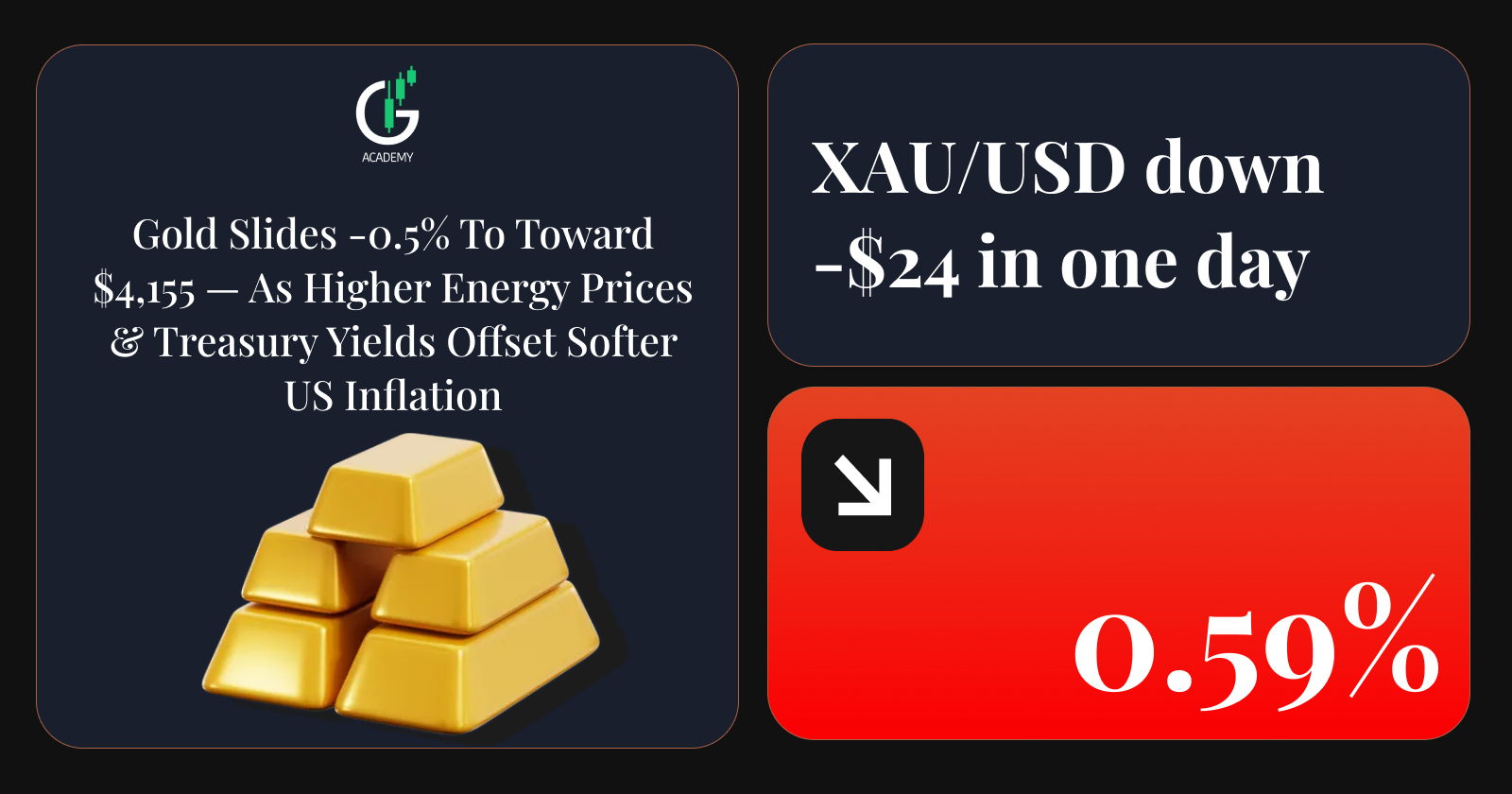
Gold fell around 0.7% to $4,152.86, leaving bullion down approximately 6.6% for September as the metal remained under significant selling pressure.
August US PCE inflation rose 0.3% MoM, below the 0.4% consensus, initially reducing expectations for an October Federal Reserve rate hike and briefly providing support to gold.
Rising energy prices and renewed bond-market pressure ultimately outweighed the softer inflation data, with elevated Treasury yields maintaining a challenging environment for non-yielding bullion.
🔎 What Drove The Gold Price Down?
Softer US Inflation Provided Only Temporary Support: August PCE rose 0.3% m/m, initially pushing Treasury yields and the US dollar lower and providing a brief boost to gold.
Fed Rate Expectations Were Repriced: Market expectations for an October Fed hike fell substantially following the softer inflation report, although expectations for additional tightening later remained elevated.
Rising Energy Prices Maintained Inflation Concerns: Higher crude prices kept longer-term inflation risks alive, limiting the positive impact of softer PCE inflation on gold.
Elevated Treasury Yields Pressured Bullion: Long-dated Treasury yields remained high, increasing the opportunity cost of holding non-yielding gold and contributing to continued selling pressure.
September's Broader Downtrend Remained Intact: Gold remained on course for an approximately 6.6% monthly decline, with the metal falling toward 4,153 despite briefly benefiting from softer US inflation data.