🥇 Gold Retreats Toward $4,070 as Strong US Employment Data Boosts Dollar and Treasury Yields
📈 Technical Analysis of XAU/USD
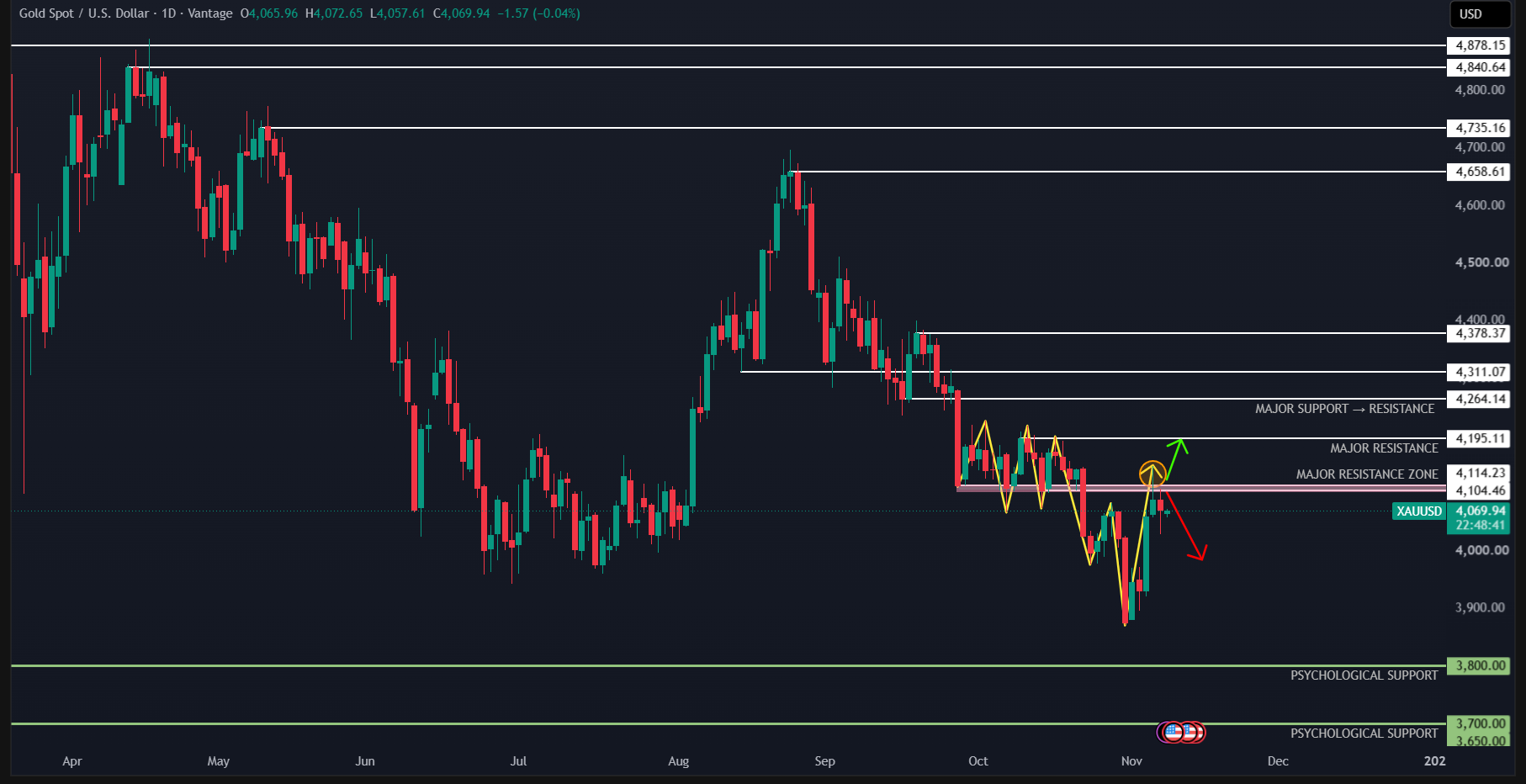
XAU/USD maintains a broader bearish technical bias despite its recent recovery, declining approximately 0.42% to 4,071.51 after reaching a session high near 4,107. Gold briefly tested the important 4,105–4,115 resistance zone before retreating, suggesting sellers continue defending this area. Despite recovering from recent lows near 3,870, the broader downward trend remains intact, with the latest rejection highlighting the difficulty buyers face in establishing a sustained bullish reversal.
RSI (14) at 47.90 indicates improving but still bearish momentum, remaining below the neutral 50 level. This suggests buying pressure has recovered following the recent selloff, although sellers continue to maintain a slight advantage. A sustained move above 50 would provide further evidence of strengthening bullish momentum.
MACD indicates improving bullish momentum within a broader bearish trend: The MACD line has crossed above its signal line, while the positive histogram suggests that selling pressure is easing and upward momentum is strengthening. However, both lines remain below zero, indicating that the broader bearish trend has not yet reversed.
Moving averages reinforce the broader bearish technical structure: Gold is approaching the 20 EMA as immediate dynamic resistance while remaining below the 50, 100 and 200 EMAs. This suggests the recovery is challenging short-term resistance, although the medium- and longer-term moving-average structure continues to favour sellers.
Bollinger Bands indicate elevated volatility and weakening selling pressure: Gold has recovered from below the lower Bollinger Band and is approaching the middle band, reflecting improving short-term buying interest. However, the relatively wide bands suggest volatility remains elevated, while the middle band continues to represent an important obstacle to further recovery.
4,105–4,115 remains the immediate resistance zone bulls need to reclaim, with a sustained breakout potentially exposing 4,195, followed by 4,265. Conversely, continued rejection below resistance could trigger another decline toward the psychological 4,000 support level, followed by 3,930 and the recent low near 3,870. A deeper breakdown could expose the psychological 3,800 support level.
📋 Overview
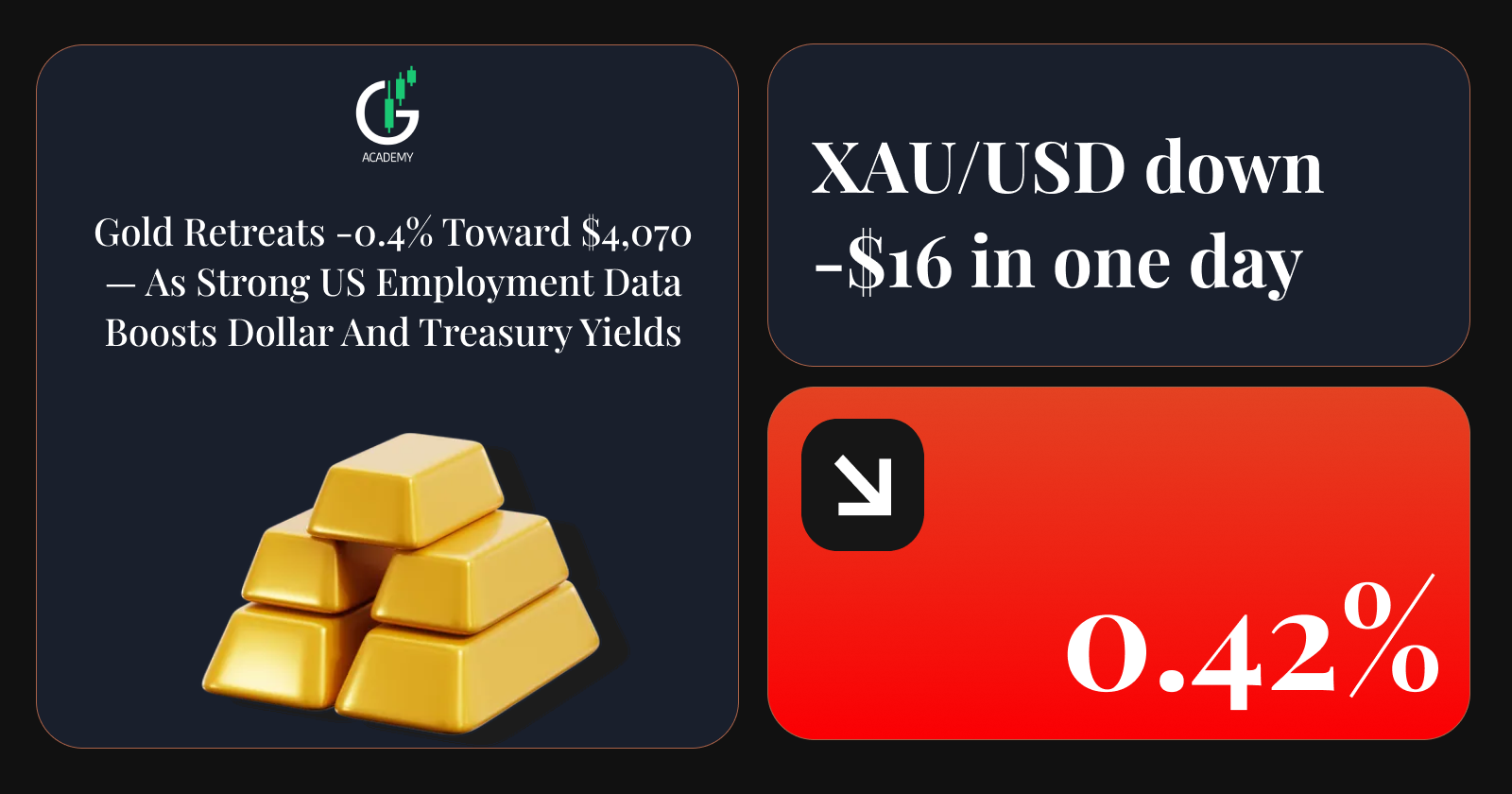
Gold declined approximately 0.42% to $4,071 on Friday, retreating after testing the 4,105 resistance area as stronger-than-expected US employment data encouraged renewed dollar buying. XAU/USD fell toward 4,030 during the session before recovering, although prices remained below the important 4,105–4,115 resistance zone.
Stronger US employment figures, rising Treasury yields and a firmer US dollar weighed on gold. October Nonfarm Payrolls increased by 165,000, exceeding expectations of approximately 65,000, while unemployment declined to 4.1% from 4.2%. The stronger labour-market figures reinforced expectations that the Federal Reserve could raise interest rates in December.
XAU/USD remains below its 20, 50, 100 and 200 EMAs, maintaining a broader bearish technical structure despite improving short-term momentum. A sustained recovery above 4,115 resistance could expose 4,195 and 4,265, while renewed selling pressure could bring 4,000 and 3,930 back into focus.
🔎 What Drove The Gold Price Down?
Stronger US Employment Data Pressured Gold: October Nonfarm Payrolls increased by 165,000, significantly exceeding expectations of approximately 65,000. Meanwhile, the unemployment rate declined to 4.1% from 4.2%, signalling continued resilience in the US labour market. The stronger employment figures reduced expectations of near-term monetary easing, placing downward pressure on gold.
Federal Reserve Rate Hike Expectations Strengthened: The stronger-than-expected employment report reinforced expectations that the Federal Reserve could increase interest rates in December. Higher interest-rate expectations reduced the relative attractiveness of non-yielding gold, limiting its ability to sustain gains above 4,100.
Stronger US Dollar Reduced International Gold Demand: The US Dollar Index gained approximately 0.7% following the employment report, making dollar-denominated gold more expensive for buyers using other currencies. The stronger dollar contributed to renewed selling pressure, pushing XAU/USD away from its recent highs.
Rising US Treasury Yields Increased Gold's Opportunity Cost: US government bond yields strengthened as investors reassessed the Federal Reserve's interest-rate outlook following the employment data. Higher yields increased the opportunity cost of holding non-yielding assets, making interest-bearing investments relatively more attractive than gold.
Profit-Taking Followed Gold's Strong Weekly Recovery: Gold had recovered significantly from recent lows near 3,870, encouraging some traders to secure profits as prices approached the important 4,105–4,115 resistance zone. The combination of profit-taking and stronger US economic data contributed to Friday's decline, although geopolitical uncertainty continued to provide some underlying safe-haven support.