🥇 Gold Rebounds Toward $4,200 as Softer Oil Prices and US Dollar Support Recovery
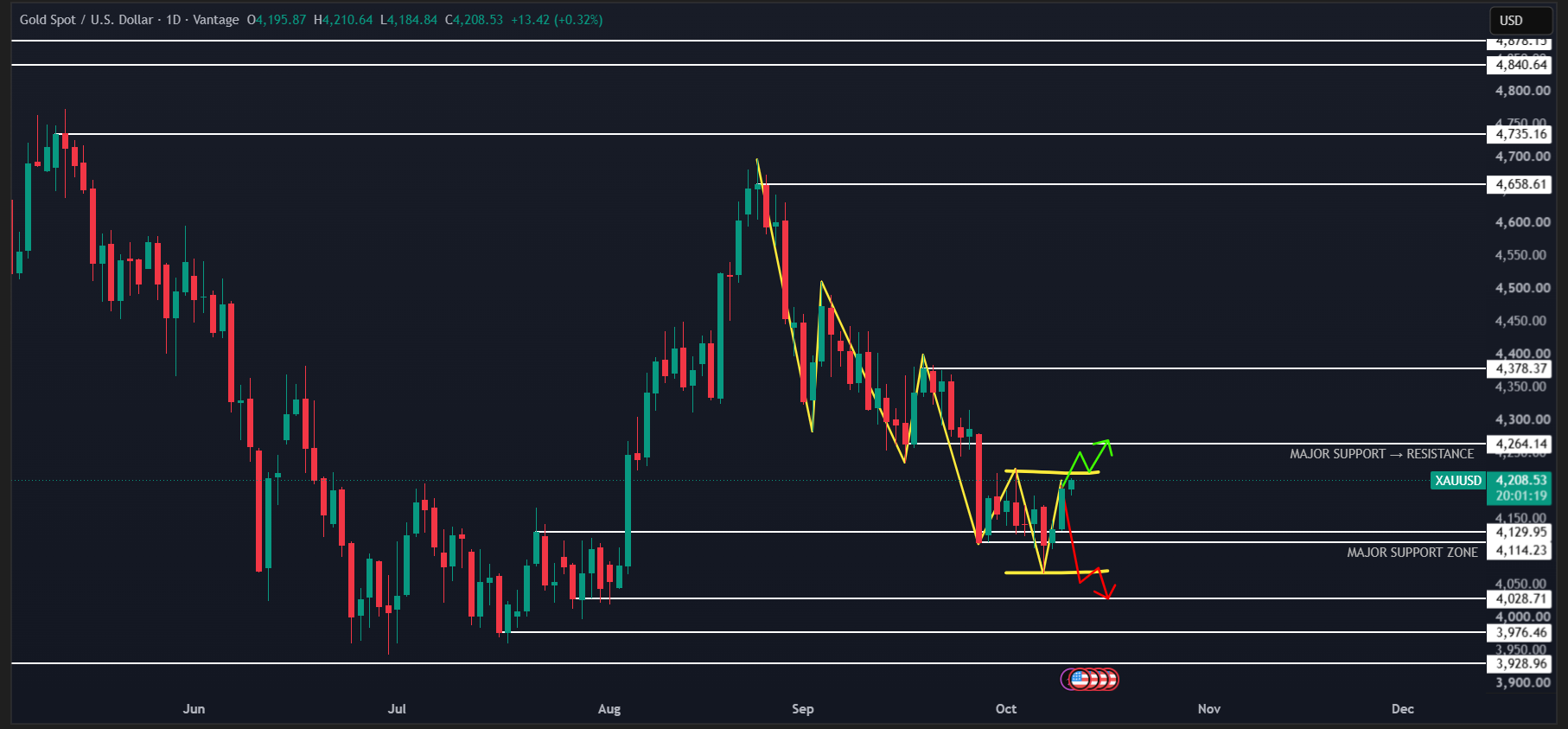
📈 Technical Analysis of XAU/USD
XAU/USD recovered strongly toward 4,195, gaining approximately 1.5%, after rebounding from the 4,130 support region and briefly testing the psychological 4,200 level. Despite the recovery, gold remains below the former 4,265 support, which has become a major resistance level. The broader bearish structure remains intact, although the latest rebound suggests selling pressure is easing.
RSI (14) at 45.71 reflects recovering but still bearish momentum, remaining below the neutral 50 level. The indicator's recent improvement suggests that selling pressure is gradually weakening, potentially supporting further short-term recovery if buyers maintain control above the 4,130–4,115 support zone.
MACD continues to signal bearish momentum, with the MACD reading of -56.54 remaining below its signal reading of -54.88. The negative histogram confirms that sellers retain control of the broader trend, although the latest price recovery suggests that bearish momentum could weaken if buying pressure continues.
Moving averages reinforce the broader bearish structure: Gold remains below the 20, 50, 100 and 200 EMAs, with the declining 20 EMA providing immediate dynamic resistance. Price has also rebounded from the lower Bollinger Band and is approaching the middle band from below, while gradually contracting bands suggest that volatility is easing following the recent decline.
4,265 remains the major resistance bulls must reclaim, with a sustained breakout potentially opening the way toward 4,380. However, rejection below resistance could trigger renewed selling toward the 4,130–4,115 support zone. A decisive breakdown beneath 4,115 would expose 4,030, followed by 3,975.
📋 Overview
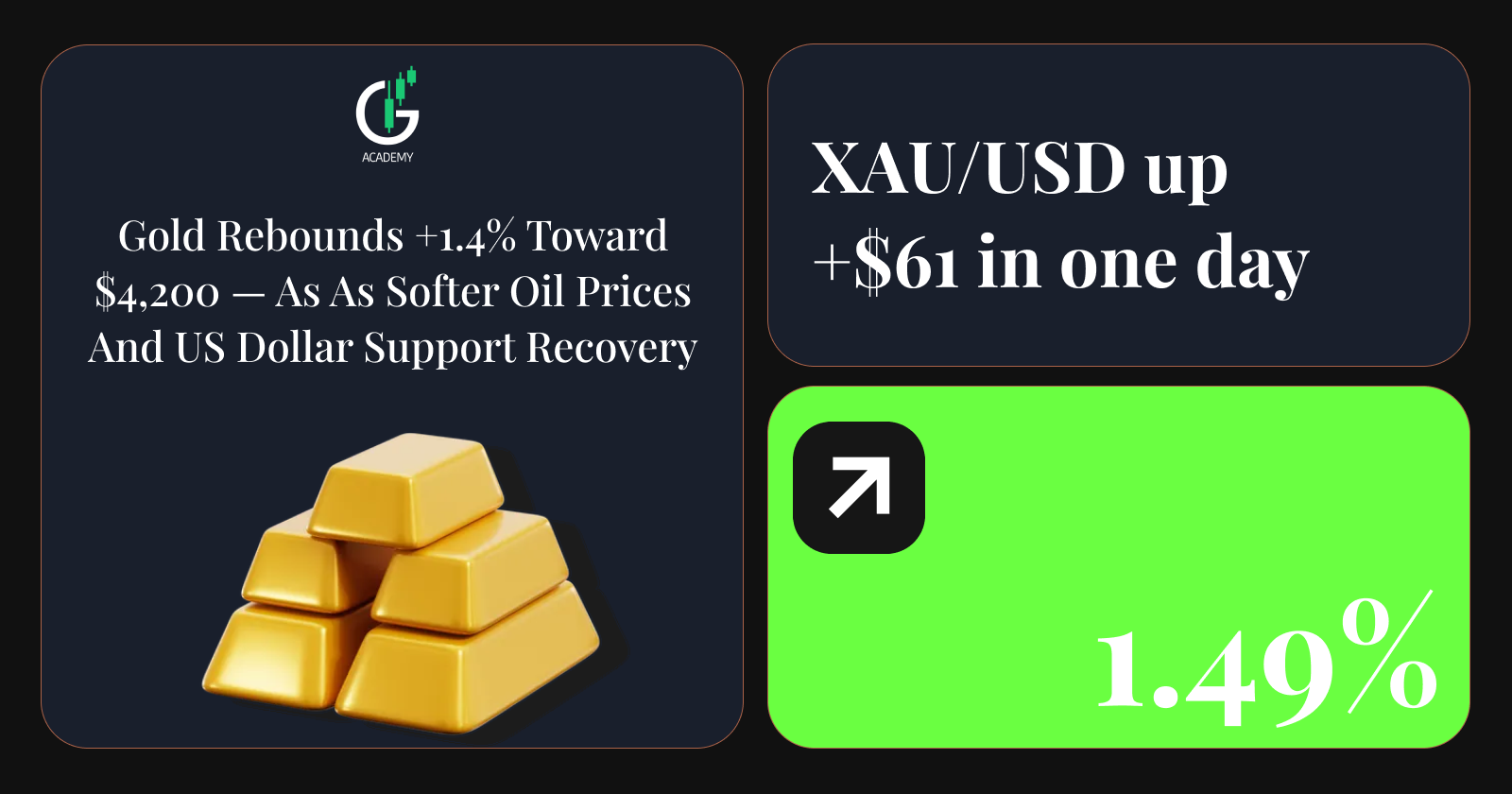
Gold advanced more than 1% on Friday, reaching its highest level in approximately one week, as easing oil prices and a softer US dollar supported demand for bullion. Spot gold traded around $4,182 during the European session before extending its recovery toward $4,195, approaching the psychological $4,200 resistance level.
Lower energy prices reduced immediate inflation concerns, while US dollar weakness made gold more attractive to international investors. However, elevated Treasury yields and expectations of further Federal Reserve tightening continued to limit the broader recovery, with geopolitical uncertainty and central-bank buying providing underlying support.
XAU/USD maintains a bearish technical bias despite recovering toward 4,195, with RSI improving to 45.71 while MACD remains negative and price trades below all four major EMAs. A sustained breakout above 4,265 resistance could support further recovery toward 4,380, while failure to defend 4,130–4,115 support could expose 4,030.
🔎 What Drove The Gold Price Up?
Lower Oil Prices Eased Inflation Concerns: Declining energy prices reduced immediate fears of another acceleration in oil-driven inflation, easing some of the pressure on gold from expectations of tighter monetary policy. This helped support bullion's recovery toward 4,195.
US Dollar Weakness Supported Bullion Demand: A softer US dollar made dollar-denominated gold more affordable for investors holding other currencies, improving international demand and contributing to Friday's recovery.
Federal Reserve Expectations Provided Short-Term Relief: Reduced urgency for an immediate Federal Reserve interest-rate increase supported non-yielding assets such as gold. However, expectations of further tightening and elevated Treasury yields continued to limit the broader bullish outlook.
Geopolitical Uncertainty Maintained Safe-Haven Interest: Ongoing negotiations between the United States and Iran sustained geopolitical uncertainty, encouraging continued interest in defensive assets despite reduced concerns about an immediate military escalation.
Central-Bank Buying Supported the Longer-Term Outlook: Expectations of continued gold accumulation by central banks, particularly China, provided underlying support for bullion. This longer-term investment demand helped improve sentiment despite the restrictive interest-rate environment and recent technical weakness.