🥇 Gold Rebounds Toward $4,135 as US Debt Concerns and Middle East Tensions Support Demand
📈 Technical Analysis of XAU/USD
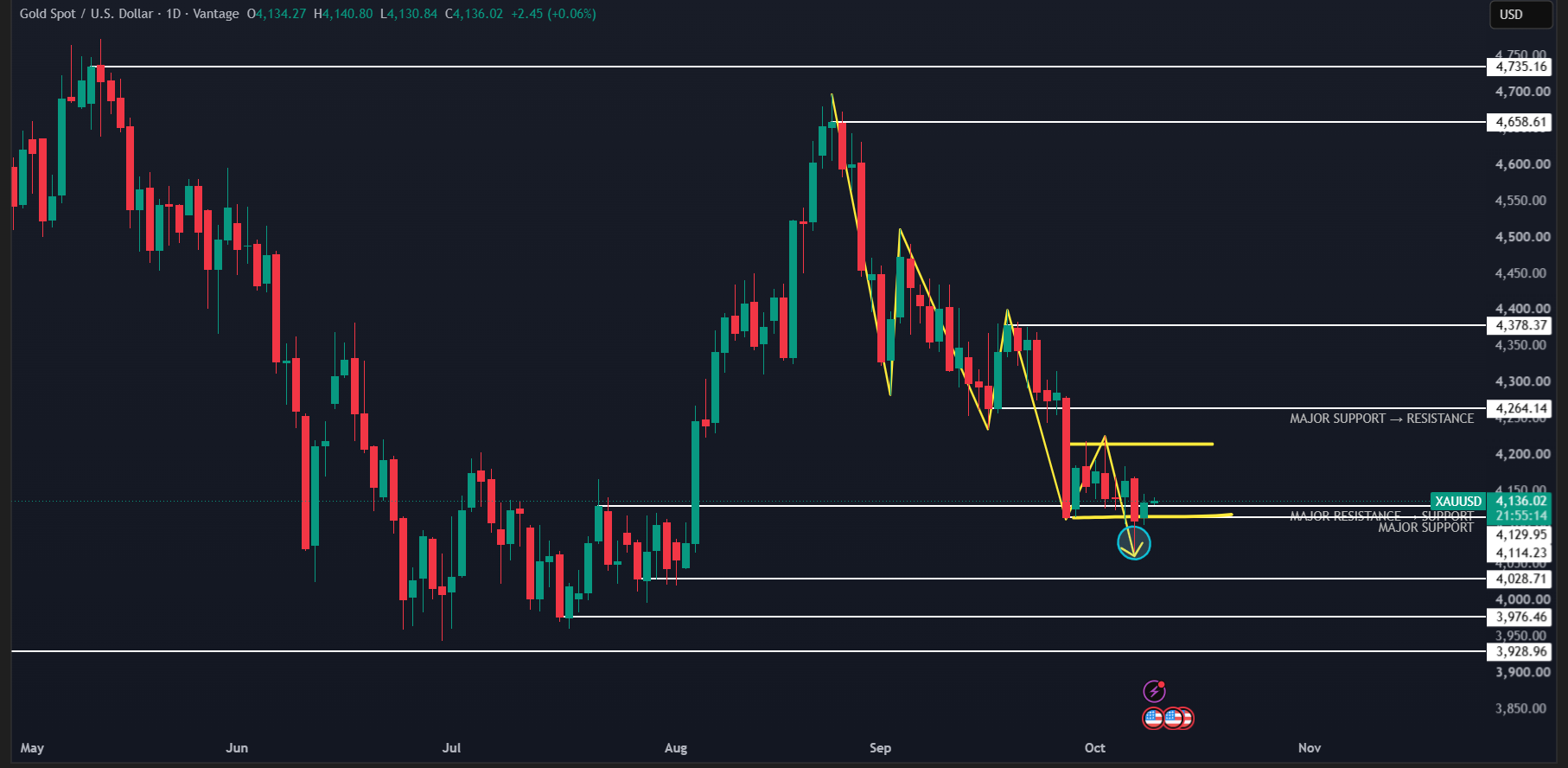
XAU/USD is stabilising near $4,135 following its recent decline, recovering modestly from the $4,105 region after falling from September's $4,660 high. However, the broader bearish structure remains intact, with price continuing to form lower highs and lower lows.
RSI (14) at 39.77 reflects continued bearish momentum, remaining below the neutral 50 level. However, the recent stabilisation suggests that the latest wave of selling pressure may be losing intensity, potentially allowing for short-term consolidation or a corrective rebound.
MACD continues to signal bearish momentum, remaining below its signal line and deep in negative territory. This confirms that sellers retain control of the broader daily trend, despite gold's recent attempts to recover from its two-month lows.
Moving averages reinforce the broader bearish structure: Gold remains below the 20, 50, 100 and 200 EMAs, with the declining 20 and 50 EMAs confirming short-term weakness. Meanwhile, price continues consolidating near the lower Bollinger Band, with elevated volatility suggesting further directional moves remain possible.
4,130–4,115 represents the immediate support zone bulls must defend, with a sustained break below potentially exposing $4,030 and the psychological $4,000 level. On the upside, a recovery above $4,265 resistance could open the way toward $4,380, although the broader bearish structure would remain a concern.
📋 Overview
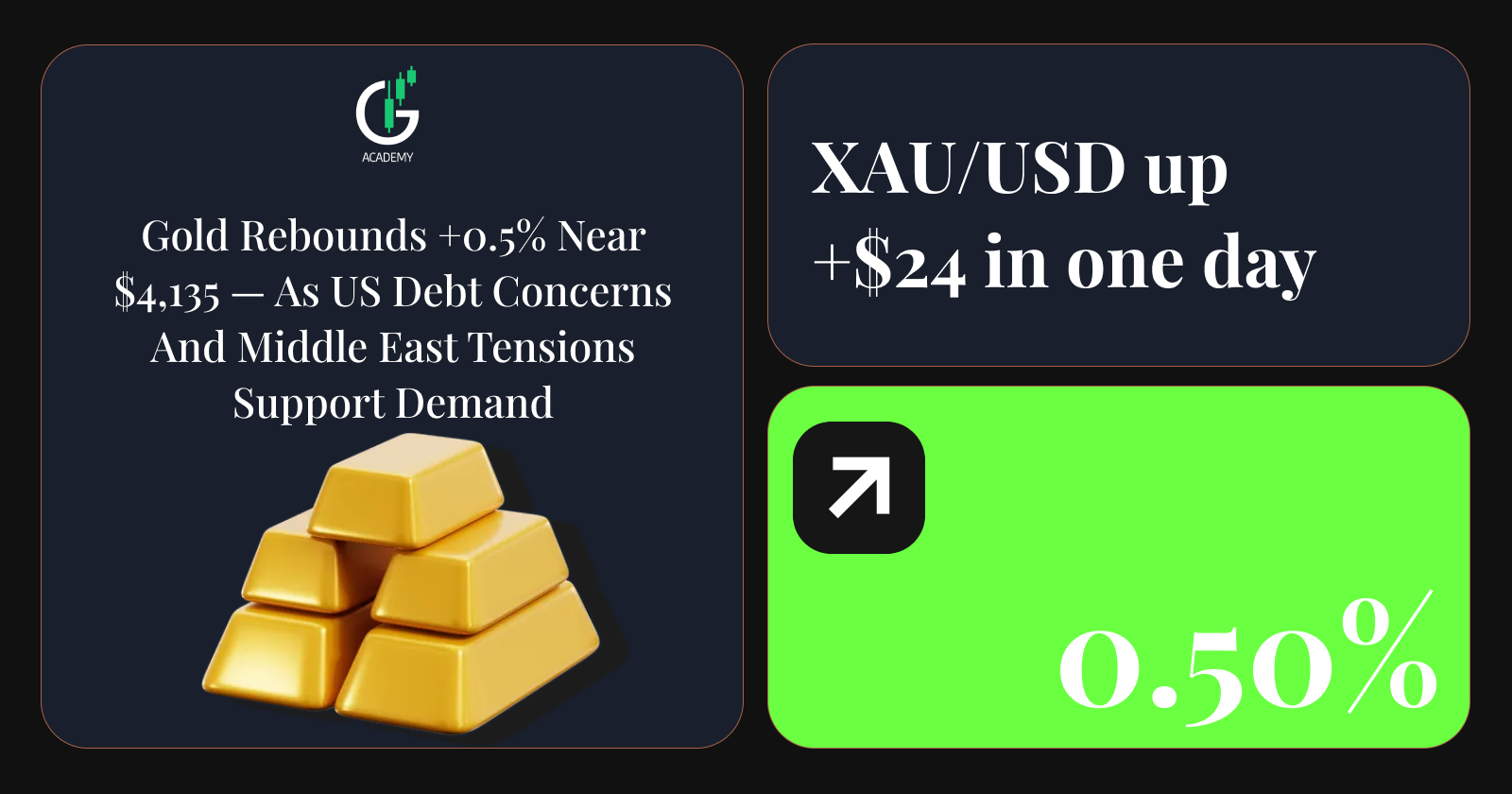
Gold recovered toward $4,135 on Thursday, following a decline toward the $4,100 region during the previous session, its lowest level since early August. Growing concerns about US government debt and renewed Middle East tensions helped support demand for bullion.
Elevated Treasury yields and restrictive Federal Reserve expectations continued to limit gold's recovery, with markets assigning approximately an 85% probability of another interest-rate increase in December. September's FOMC minutes also revealed disagreements among policymakers, adding uncertainty to the monetary policy outlook.
XAU/USD maintains a bearish technical bias despite stabilising near $4,135, trading below all four major EMAs with RSI near 40 and MACD remaining negative. The 4,130–4,115 support zone remains critical, while a sustained recovery above $4,265 would be needed to improve the near-term technical outlook.
🔎 What Drove The Gold Price Up?
US Debt Concerns Supported Safe-Haven Demand: Rising government borrowing and elevated Treasury yields increased concerns about long-term US fiscal sustainability, encouraging interest in gold as an alternative store of value and helping prices recover from recent lows.
Federal Reserve Uncertainty Added Support: September's FOMC minutes revealed disagreements among policymakers over the reasons for raising interest rates, leaving investors uncertain about the timing and direction of future monetary policy decisions.
December Rate-Hike Expectations Limited the Recovery: Markets continued to assign approximately an 85% probability of another Federal Reserve rate increase in December, maintaining pressure on non-yielding bullion despite the latest rebound.
Renewed Middle East Tensions Increased Defensive Demand: Fresh threats to shipping through the Strait of Hormuz raised geopolitical uncertainty, supporting demand for traditional defensive assets such as gold.
Elevated Treasury Yields and Dollar Strength Remained Headwinds: Despite the recovery, the US dollar's earlier strength and persistently high Treasury yields continued to reduce the relative appeal of non-yielding bullion, preventing a stronger upward move and keeping the broader outlook cautious.