🥇 Gold Rebounds Above $4,170 as Falling Treasury Yields and Weaker Dollar Support Recovery
📈 Technical Analysis of XAU/USD
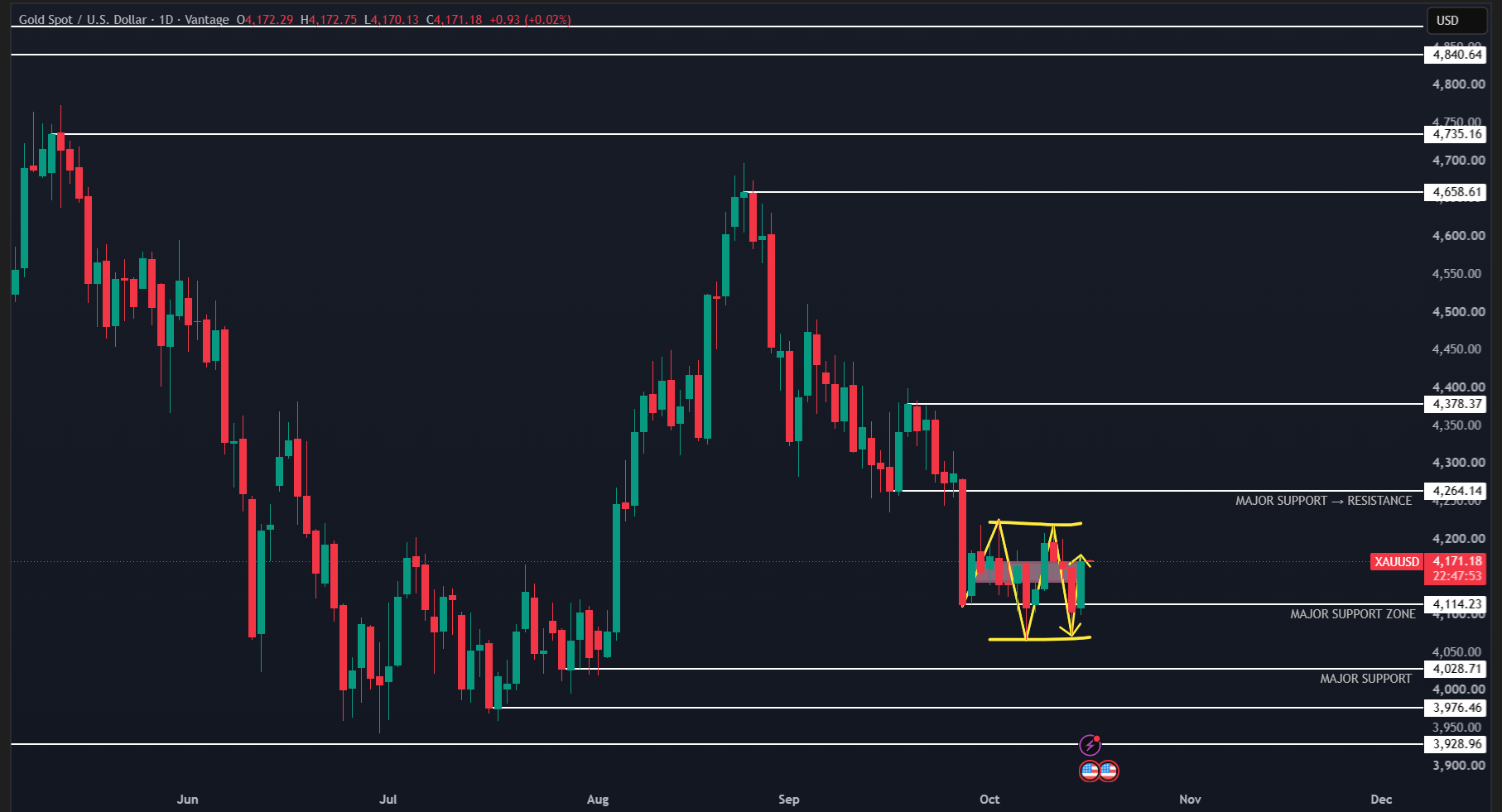
XAU/USD maintains a bearish broader technical bias despite its latest recovery, trading around 4,170 after rebounding from the important 4,115 support zone. The recovery suggests improving short-term buying interest, although gold remains within a consolidation range and below the major 4,265 resistance level, which bulls need to reclaim to strengthen the recovery.
RSI (14) at 45.55 signals improving momentum, recovering from recent lows but remaining below the neutral 50 level. This suggests bearish momentum is weakening as buyers regain some control, although the reading has yet to confirm a sustained bullish reversal.
MACD indicates stabilising bearish momentum: The MACD remains in negative territory, although recent histogram readings suggest downside momentum is easing. This indicates that selling pressure may be losing intensity, potentially allowing further short-term recovery if buying interest continues to strengthen.
Moving averages reinforce the broader bearish technical structure: Gold remains below the 20, 50, 100 and 200 EMAs, with the shorter-term averages continuing to act as dynamic resistance. The 100 and 200 EMAs reinforce the broader bearish trend, suggesting the latest recovery remains corrective until price establishes a sustained move above key resistance levels.
Bollinger Bands suggest improving price stability: Gold has rebounded from the lower portion of the Bollinger Bands but continues trading below the middle band. This suggests selling pressure is easing, although the recovery has not yet confirmed a reversal of the broader bearish trend.
4,265 remains the major resistance bulls need to reclaim, with a sustained breakout potentially exposing 4,380. Conversely, rejection below resistance could trigger another test of the 4,115 support zone, while a confirmed breakdown could expose 4,030, followed by 3,975.
📋 Overview
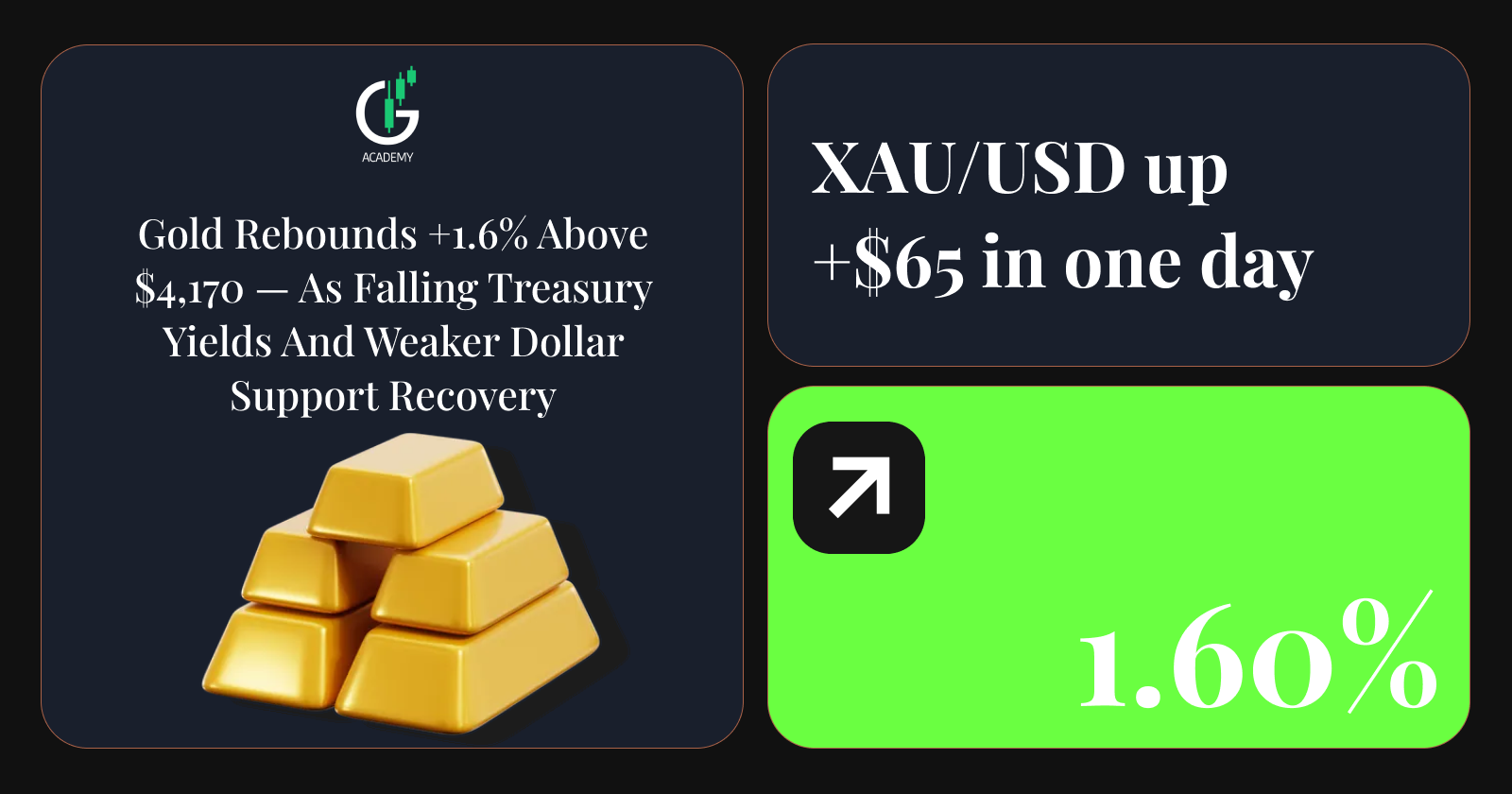
Gold rebounded approximately 1.60% toward $4,170 on Thursday, ending a three-session losing streak as falling US Treasury yields and a weaker dollar encouraged renewed buying interest. The recovery followed gold's recent decline toward the important 4,115 support zone, although the broader technical outlook remains bearish.
Declining US Treasury yields and easing Federal Reserve rate-hike expectations supported gold's recovery. The benchmark US 10-year Treasury yield fell toward 5.09%, while markets assigned approximately a 72% probability to unchanged interest rates at the October Fed meeting. These developments reduced pressure on non-yielding gold despite persistent US inflation concerns.
XAU/USD continues to trade below all four major EMAs, maintaining a bearish broader technical structure despite improving short-term momentum. A sustained recovery above 4,265 resistance could open the way toward 4,380, while renewed selling pressure could expose 4,115 and 4,030 support.
🔎 What Drove The Gold Price Up?
Falling US Treasury Yields Supported Gold Demand: US Treasury yields declined sharply as investors increased demand for government bonds, with the benchmark 10-year yield falling toward 5.09%. Lower yields reduced the opportunity cost of holding non-yielding gold, improving its attractiveness and supporting Thursday's recovery.
Weaker US Dollar Encouraged Buying Interest: The US Dollar Index retreated, making dollar-denominated gold less expensive for international buyers. The weaker dollar helped gold recover from recent lows and contributed to renewed demand for the precious metal.
Federal Reserve Rate-Hike Expectations Eased: Markets reduced expectations for an October interest-rate increase, assigning approximately a 72% probability to unchanged rates. The shift in monetary policy expectations reduced immediate pressure on gold, allowing prices to recover despite concerns about persistent inflation.
Persistent Inflation Concerns Supported Gold's Appeal: Stronger US CPI and PPI readings continued to raise concerns about elevated inflationary pressures. Although persistent inflation could encourage restrictive Federal Reserve policy, it also supported gold's potential role as an inflation hedge, contributing to renewed investor interest.
Safe-Haven Demand Provided Additional Support: Uncertainty surrounding technology-sector valuations, AI-related debt and ongoing geopolitical developments encouraged defensive positioning. These concerns increased demand for traditional safe-haven assets, helping gold recover toward 4,170 despite the broader bearish technical environment.