🥇 Gold Rebounds Above $4,100 as Falling Treasury Yields and Oil Prices Support Recovery
📈 Technical Analysis of XAU/USD
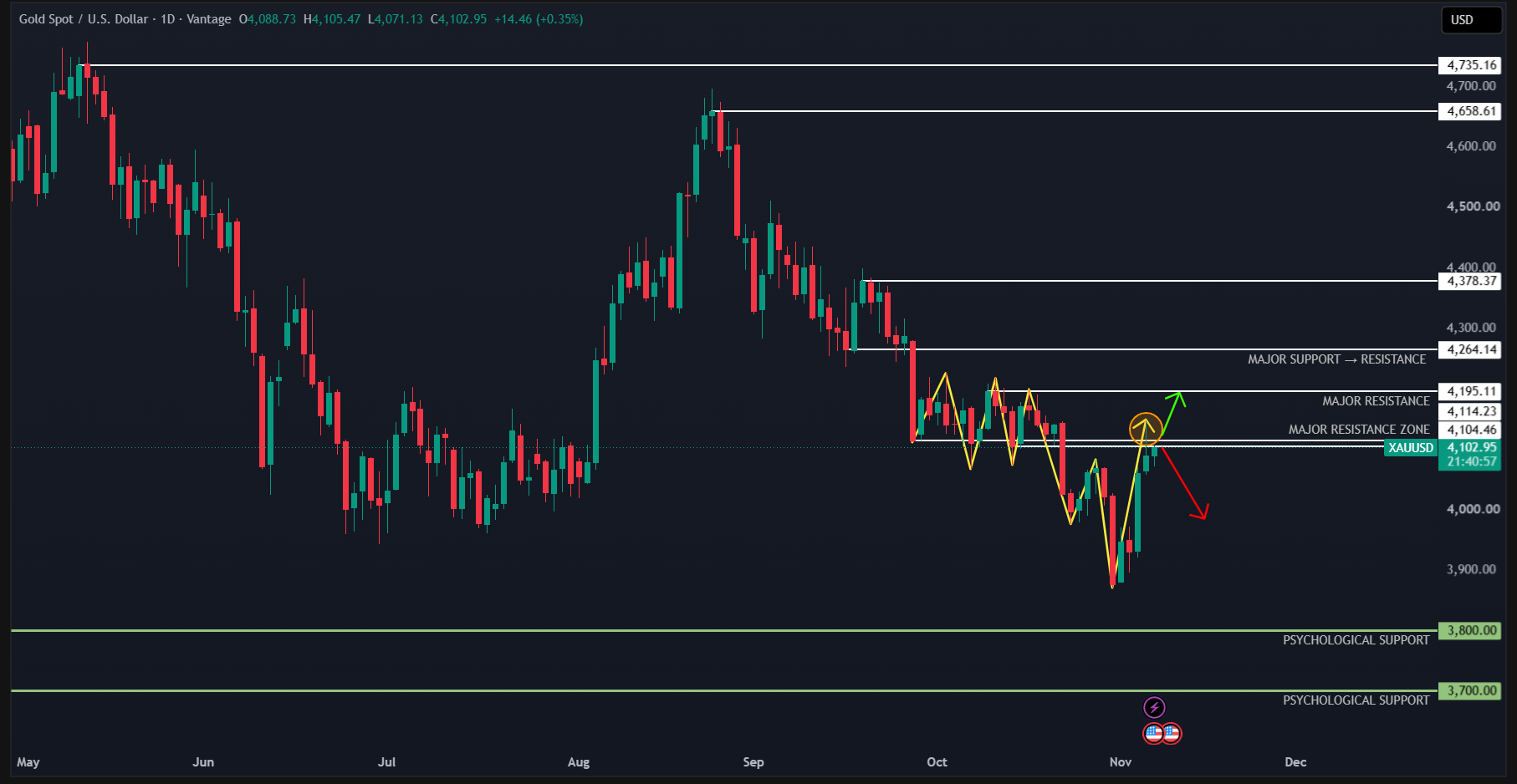
XAU/USD maintains a broader bearish technical bias despite its strong recovery, trading around 4,103 after rebounding from approximately 3,880. Gold has reclaimed the psychological 4,000 level and is now challenging the important 4,105–4,115 resistance zone. The recovery suggests improving short-term buying interest, although the broader downward trend remains intact until buyers establish a sustained breakout above key resistance levels.
RSI (14) at 50.39 indicates neutral momentum with improving buying pressure, recovering from recent oversold conditions and moving slightly above the neutral 50 level. This suggests buyers are gradually regaining control, although further improvement would be needed to confirm a sustained bullish reversal.
MACD indicates strengthening bullish momentum within a broader bearish trend: The MACD line at -55.498 has moved above its signal line at -63.885, suggesting that upward momentum is improving. However, both readings remain below zero, indicating that the broader bearish trend has not yet reversed despite the latest recovery.
Moving averages highlight an important resistance test: Gold is testing the 20 EMA as immediate dynamic resistance, while the 50, 100 and 200 EMAs remain above the current price. This suggests the recovery is challenging short-term resistance, although the broader moving-average structure continues to favour sellers.
Bollinger Bands indicate elevated volatility and easing selling pressure: Gold has rebounded from the lower Bollinger Band toward the middle band, reflecting renewed buying interest following the recent decline. The relatively wide bands suggest volatility remains elevated, although the recovery indicates that downside pressure has eased.
4,105–4,115 remains the immediate resistance zone bulls need to reclaim, with a sustained breakout potentially exposing 4,195, followed by 4,265. Conversely, rejection below resistance could trigger another pullback toward the psychological 4,000 level, followed by 3,975 and 3,930. A deeper decline could expose the recent low near 3,880, with 3,800 representing the next major psychological support.
📋 Overview
Gold extended its recovery on Thursday, reaching approximately 4,146.65, its highest level in more than two weeks, before retreating toward 4,088. The precious metal subsequently recovered toward $4,103, reflecting continued buying interest following Wednesday's strong advance.
Declining US Treasury yields, falling crude oil prices and earlier US dollar weakness supported gold's recovery. Lower bond yields reduced the opportunity cost of holding non-yielding gold, while weaker energy prices helped ease inflation concerns. However, a subsequent dollar recovery and cautious positioning ahead of US employment data limited further gains.
XAU/USD is testing its 20 EMA while remaining below the 50, 100 and 200 EMAs, suggesting that the latest recovery has improved short-term momentum without confirming a broader bullish reversal. A sustained breakout above 4,105–4,115 resistance could expose 4,195 and 4,265, while rejection could shift attention toward 4,000 and 3,975.
🔎 What Drove The Gold Price Up?
US Midterm Election Results Supported Market Sentiment: Democratic gains in Congress increased expectations of reduced geopolitical escalation and possible changes to US fiscal policy. These developments contributed to shifting investor expectations and supported renewed interest in gold.
Declining US Treasury Yields Increased Gold's Appeal: Falling US government bond yields reduced the opportunity cost of holding non-yielding assets. This made gold relatively more attractive compared with interest-bearing investments, supporting its recovery toward a two-week high.
Lower Oil Prices Eased Inflation Concerns: The sharp decline in crude oil prices helped reduce concerns about additional energy-driven inflationary pressure. Lower inflation expectations supported the possibility of a less restrictive Federal Reserve policy outlook, improving demand for precious metals.
Earlier US Dollar Weakness Encouraged Gold Buying: Selling pressure on the US dollar made dollar-denominated gold relatively less expensive for international buyers, helping prices extend their recovery above 4,100. However, the dollar subsequently recovered, contributing to gold's retreat from approximately 4,146.65.
Upcoming US Employment Data Encouraged Cautious Positioning: Investors remained focused on Friday's Nonfarm Payrolls report, which could provide further guidance on US labour-market conditions and the Federal Reserve's interest-rate outlook. Traders reduced exposure ahead of the release, contributing to gold's pullback from its session highs despite the broader recovery.