🥇 Gold Rebounds Above $4,060 as Falling Oil Prices Ease Inflation Concerns
📈 Technical Analysis of XAU/USD
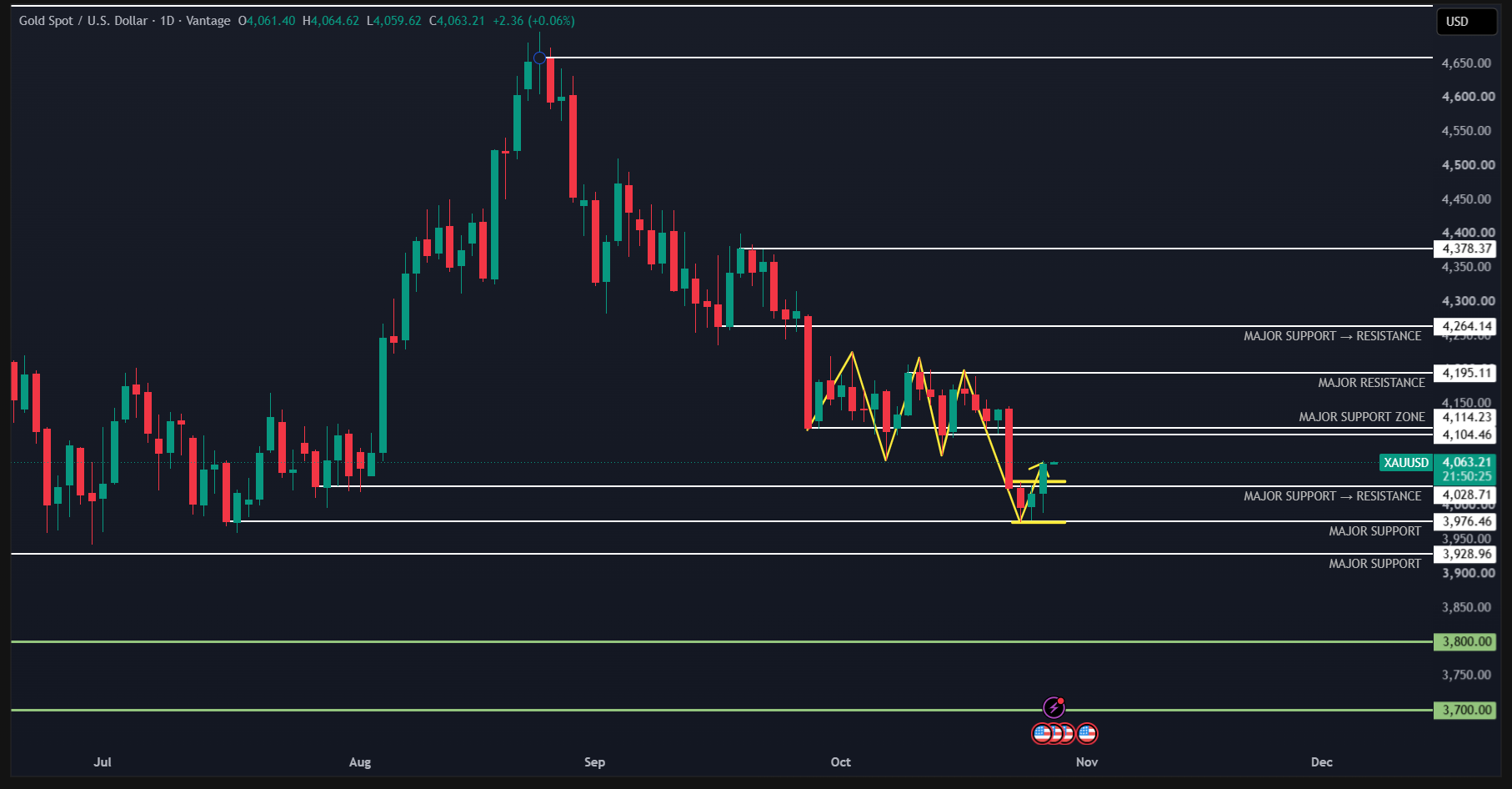
XAU/USD maintains a bearish broader technical bias despite its latest recovery, trading around 4,060 after rebounding from an intraday low near 3,989. Gold has recovered above the former 4,030 support level, which now represents an important area for buyers to defend. However, the broader bearish structure remains intact while prices trade below the major 4,105–4,115 resistance zone.
RSI (14) at 40.82 indicates improving but still bearish momentum, recovering from recent lows while remaining below the neutral 50 level. This suggests selling pressure may be easing as buyers regain some control, although the indicator has not yet confirmed a sustained bullish reversal.
MACD confirms that broader bearish momentum remains intact: The MACD continues trading below its signal line, with negative readings indicating that sellers retain an advantage. Despite the latest price recovery, the indicator has not yet confirmed a reversal of the prevailing bearish trend.
Moving averages reinforce the broader bearish technical structure: Gold remains below the 20, 50, 100 and 200 EMAs, confirming bearish conditions across short-, medium- and longer-term trends. The 20 EMA represents the nearest dynamic resistance, potentially limiting further recovery attempts.
Bollinger Bands indicate elevated volatility and a potential corrective rebound: Gold is recovering after previously trading below the lower Bollinger Band, suggesting that the recent selling pressure may have become temporarily extended. The rebound indicates improving short-term buying interest, although volatility remains elevated and the broader bearish structure has not yet reversed.
4,105–4,115 remains the major resistance zone bulls need to reclaim, with a sustained breakout potentially exposing 4,195, followed by 4,265. Conversely, failure to maintain the recovery above 4,030 could trigger renewed selling toward 3,975, followed by 3,930.
📋 Overview
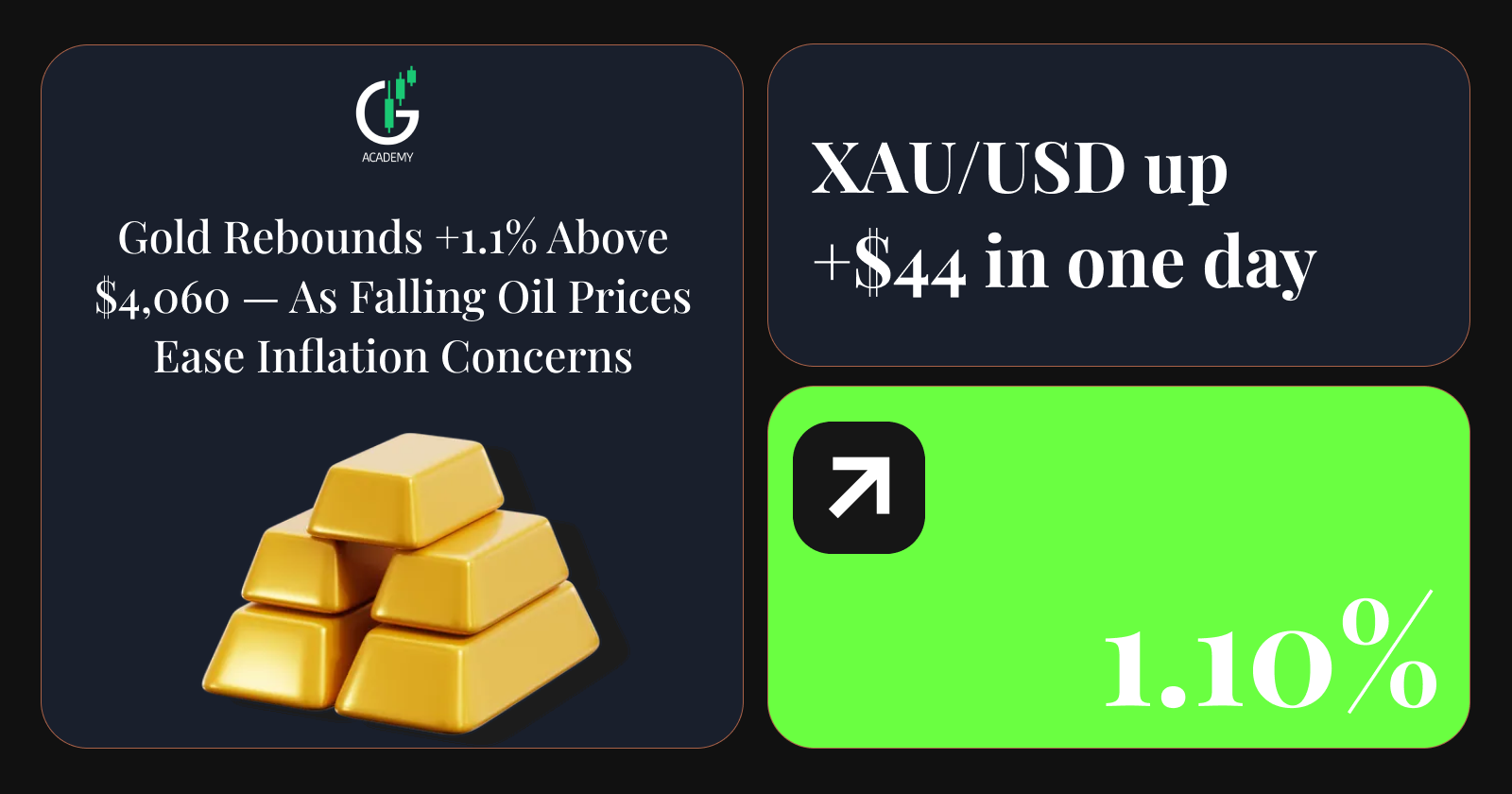
Gold recovered more than 1% on Tuesday, rebounding from an intraday low near 3,989 to trade around $4,061. The precious metal recovered above the psychological 4,000 level and reclaimed 4,030, supported by falling oil prices and renewed buying interest following its recent decline.
Declining crude oil prices helped ease immediate inflation concerns, encouraging investors to reassess expectations for future Federal Reserve interest-rate increases. Gold recovered despite a stronger US dollar and elevated Treasury yields, which initially pressured the precious metal.
XAU/USD remains below all four major EMAs, maintaining its broader bearish technical structure despite improving short-term momentum. A sustained recovery above 4,115 resistance could open the way toward 4,195, while renewed selling pressure below 4,030 support could expose 3,975 and 3,930.
🔎 What Drove The Gold Price Up?
Falling Oil Prices Eased Inflation Concerns: Crude oil prices declined, helping reduce concerns that elevated energy costs would keep US inflation persistently high. Lower energy prices encouraged investors to reassess expectations for further Federal Reserve monetary tightening, providing support for non-yielding gold.
Federal Reserve Policy Expectations Influenced Market Sentiment: Investors remained focused on Wednesday's Federal Reserve interest-rate decision, with attention shifting toward the central bank's future policy guidance. Uncertainty surrounding the outlook for additional rate increases contributed to cautious positioning as markets reassessed inflation risks.
Technical Recovery Encouraged Renewed Buying Interest: Gold rebounded from approximately 3,989 following its recent sharp decline, attracting buyers at lower price levels. The recovery above 4,000 and 4,030 helped strengthen short-term momentum, pushing XAU/USD toward 4,060.
Stronger US Dollar and Elevated Treasury Yields Initially Pressured Gold: Dollar strength and elevated US government bond yields weighed on gold during the earlier session, increasing the opportunity cost of holding non-yielding assets. However, renewed buying interest eventually outweighed these pressures, allowing gold to recover its earlier losses.
Middle East Geopolitical Developments Influenced Safe-Haven Demand: Ongoing negotiations and security risks in the Middle East continued to influence expectations for energy prices, inflation and financial-market uncertainty. These developments maintained potential safe-haven demand for gold, contributing to its recovery despite the broader bearish technical environment.