🥇 Gold Plunges Toward $4,030 as Hotter US Inflation Strengthens Fed Rate Hike Expectations
📈 Technical Analysis of XAU/USD
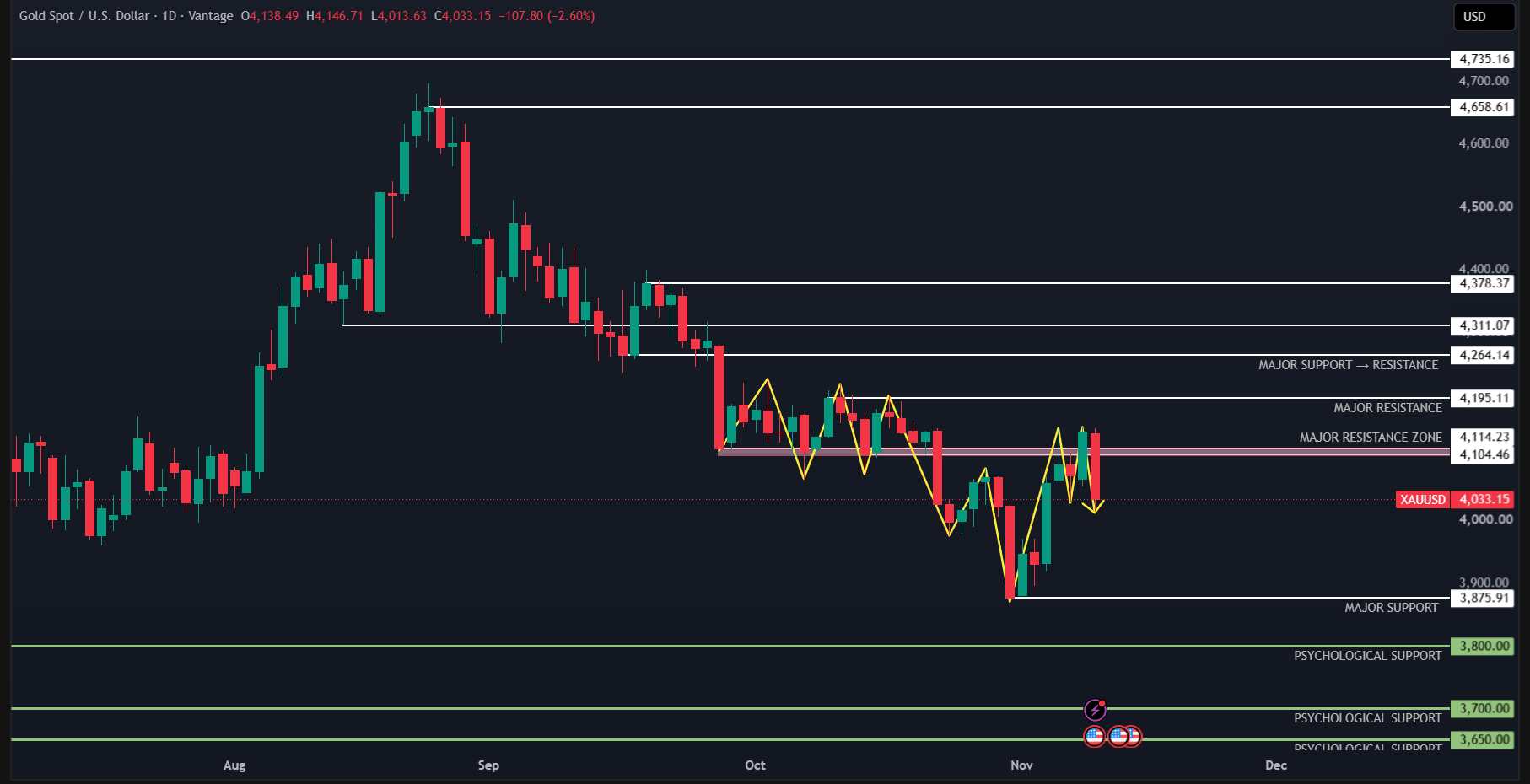
XAU/USD maintains a broader bearish technical bias as selling pressure returns, declining approximately 2.60% to 4,033 after reaching an intraday high near 4,147. Gold failed to sustain its recovery above the important 4,105–4,115 resistance zone, reversing its recent bullish momentum. The sharp rejection suggests sellers continue defending key resistance levels, with the broader downward trend remaining intact despite the recovery from the recent 3,875 support level.
RSI (14) at 45.61 indicates renewed bearish momentum, falling below the neutral 50 level as selling pressure strengthens. This suggests sellers have regained control in the short term, although the indicator remains above the oversold threshold of 30, indicating that further downside remains possible.
MACD indicates weakening bearish momentum despite renewed selling pressure: The MACD line remains above its signal line, while the histogram has weakened, suggesting that the previous bearish momentum has eased. However, the latest price decline highlights that buyers have struggled to maintain control, leaving the broader bearish trend intact.
Moving averages reinforce the broader bearish technical structure: Gold continues trading below the 20, 50, 100 and 200 EMAs, confirming bearish conditions across short-, medium- and longer-term trends. The 20 EMA remains the nearest dynamic resistance, while the higher moving averages reinforce the broader downward trend and could limit further recovery attempts.
Bollinger Bands indicate elevated volatility and renewed selling pressure: Gold has retreated into the lower half of the Bollinger Bands after failing to sustain its recovery toward the middle band. The relatively wide band structure reflects elevated market volatility, while the latest decline suggests that bearish pressure is strengthening.
4,105–4,115 remains the immediate resistance zone bulls need to reclaim, with a sustained recovery potentially exposing 4,195, followed by 4,265. Conversely, continued rejection below resistance could trigger further selling toward the psychological 4,000 level, followed by 3,875. A deeper breakdown could expose the psychological 3,800 support level.
📋 Overview
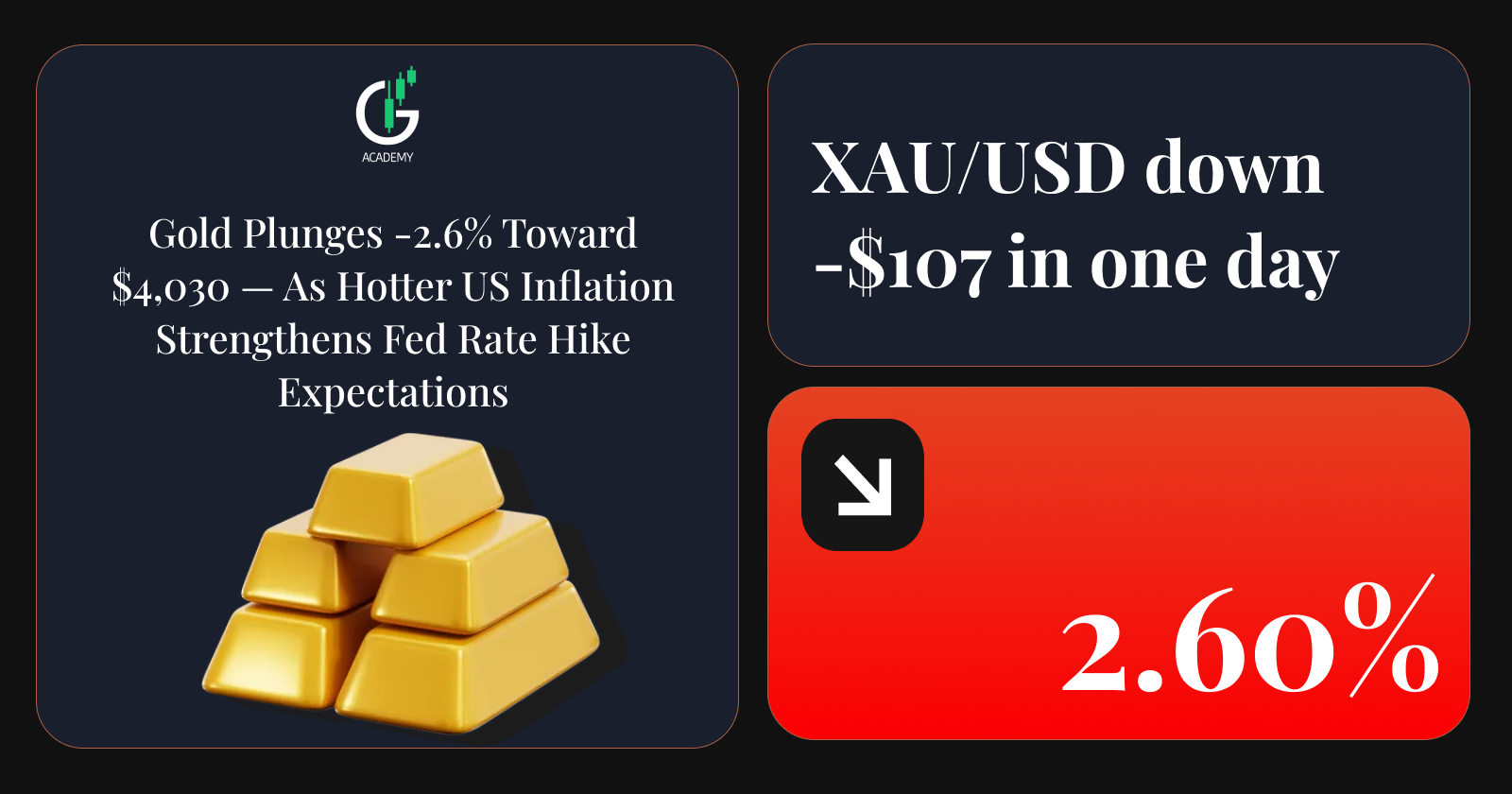
Gold declined approximately 2.60% toward $4,033 on Tuesday, reversing its recent recovery after reaching an intraday high near 4,147. The precious metal fell sharply following stronger-than-expected US inflation data, with selling pressure accelerating as prices dropped below the important 4,105–4,115 resistance zone.
Higher US inflation, rising Treasury yields and a stronger US dollar weighed on gold. October headline Consumer Price Index (CPI) increased 0.4% month-on-month, exceeding expectations of 0.3%, while core CPI rose 0.3%. The stronger inflation figures reinforced expectations that the Federal Reserve could raise interest rates in December, reducing demand for non-yielding gold.
XAU/USD remains below its 20, 50, 100 and 200 EMAs, maintaining its broader bearish technical structure despite recent recovery attempts. A sustained move above 4,115 resistance could expose 4,195 and 4,265, while renewed selling pressure below 4,000 could bring 3,875 and 3,800 into focus.
🔎 What Drove The Gold Price Down?
Stronger US Inflation Increased Selling Pressure: October headline Consumer Price Index (CPI) increased 0.4% month-on-month, exceeding the 0.3% forecast, while core CPI rose 0.3%, also above expectations. The stronger inflation figures reinforced concerns that US price pressures could remain elevated, weighing on gold.
Federal Reserve Rate Hike Expectations Strengthened: Higher-than-expected inflation increased expectations that the Federal Reserve could raise interest rates in December. The prospect of tighter monetary policy reduced the relative attractiveness of non-yielding gold, contributing to Tuesday's sharp decline.
Rising US Treasury Yields Increased Gold's Opportunity Cost: The benchmark US 10-year Treasury yield approached 4.99%, making interest-bearing investments relatively more attractive. Higher bond yields increased the opportunity cost of holding gold, encouraging investors to favour assets offering regular interest income.
Stronger US Dollar Reduced International Gold Demand: The US Dollar Index advanced toward 102.30, making dollar-denominated gold more expensive for international buyers. The stronger dollar contributed to renewed selling pressure, pushing XAU/USD away from its session highs.
Technical Rejection Accelerated Bearish Momentum: Gold failed to sustain its recovery above 4,100, with sellers returning near the important 4,105–4,115 resistance zone. The rejection triggered a sharp decline from approximately 4,147 toward 4,030, reinforcing the broader bearish structure and bringing the psychological 4,000 support level back into focus.