🥇 Gold Plunges Below $3,900 as Hawkish Fed Expectations and Stronger Dollar Intensify Selling Pre...
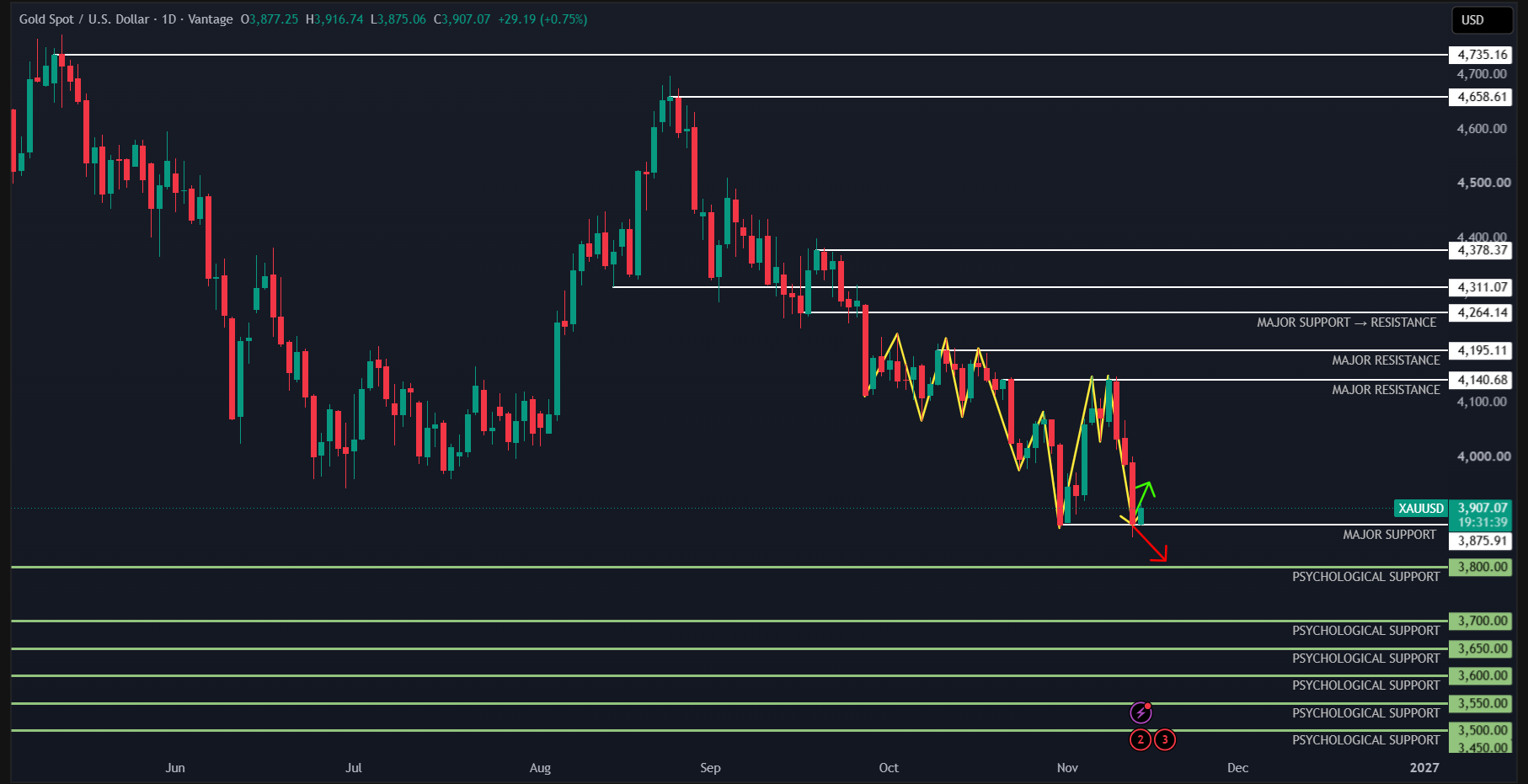
📈 Technical Analysis of XAU/USD
XAU/USD maintains a strong bearish technical outlook as selling pressure intensifies, declining approximately 2.81% to 3,875.78 after reaching an intraday low near 3,852.50. Gold failed to sustain its recent recovery above 4,140 resistance, triggering another sharp sell-off below the psychological 4,000 and 3,900 levels. The latest decline has brought gold back to the important 3,875 support level, with a sustained breakdown potentially opening the way for further losses.
RSI (14) at 36.96 indicates strengthening bearish momentum, remaining below the neutral 50 level as sellers maintain control. Although the indicator is approaching oversold territory, it remains above the 30 threshold, suggesting that further downside remains possible before gold reaches technically oversold conditions.
MACD continues to reflect a bearish technical environment: The MACD line remains above its signal line, suggesting earlier bearish momentum had weakened. However, both readings remain in negative territory, while the latest sharp decline challenges the previous recovery and reinforces the broader bearish outlook.
Moving averages reinforce the broader bearish trend: Gold continues trading below its 20, 50, 100 and 200 EMAs, confirming bearish conditions across short-, medium- and longer-term trends. The shorter-term moving averages remain important dynamic resistance levels, while the higher EMAs reinforce the broader downward trend and could limit further recovery attempts.
Bollinger Bands indicate expanding downside volatility: Gold is pressing against the lower Bollinger Band as selling pressure intensifies, reflecting increased market volatility and aggressive bearish momentum. However, the sharp decline also raises the possibility of short-term overextension, which could trigger a temporary recovery if buyers defend nearby support.
3,875 remains the immediate major support level buyers need to defend, with a sustained breakdown potentially exposing the psychological 3,800 level, followed by 3,700. Conversely, a recovery above 3,875 could support a short-term rebound toward 4,000, although a stronger bullish shift would require gold to reclaim 4,140 resistance, followed by 4,195.
📋 Overview
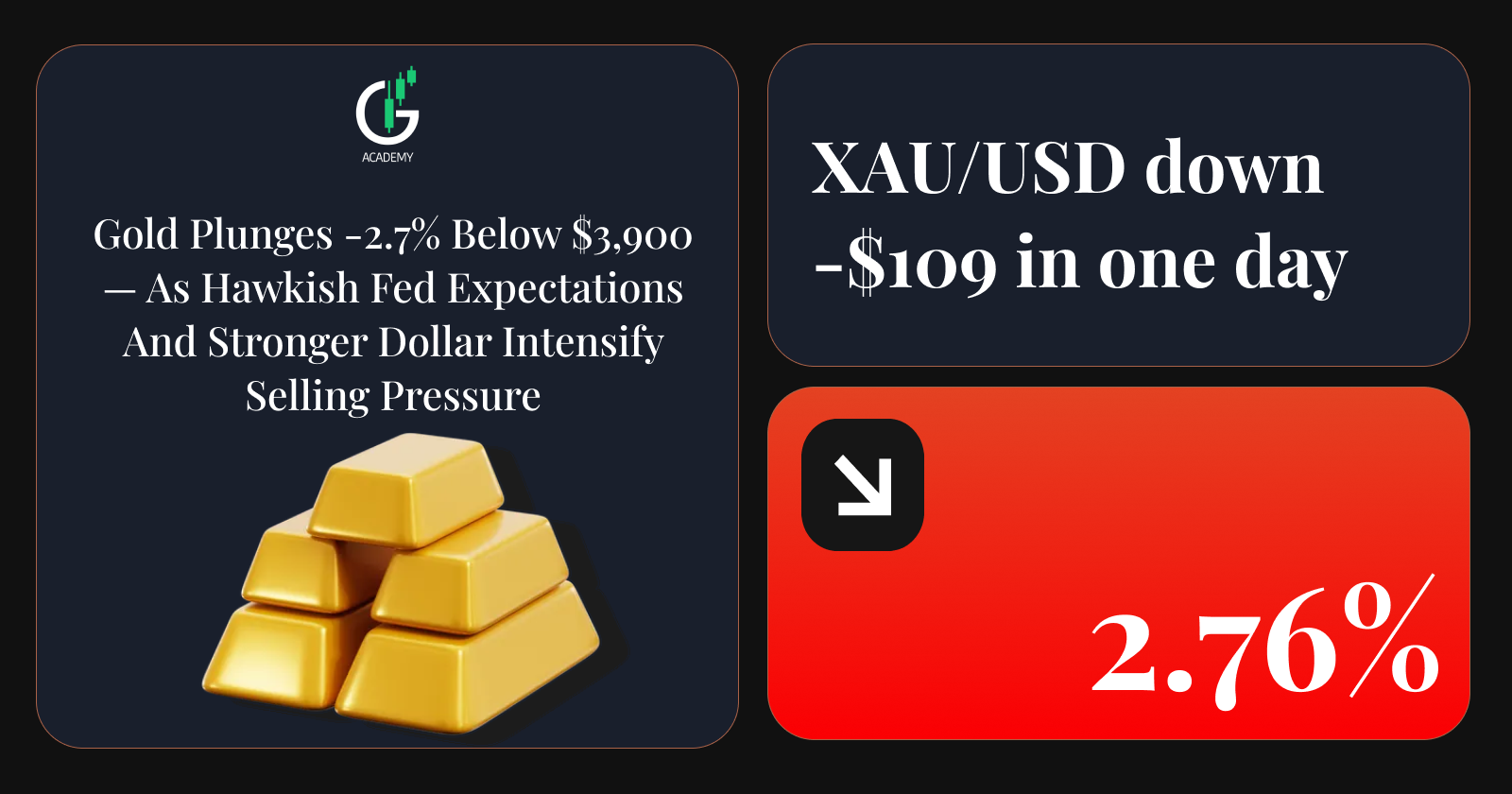
Gold declined approximately 2.81% toward $3,876 on Thursday, extending its recent sell-off after reaching an intraday low near 3,852.50. The precious metal broke below the psychological 3,900 level, bringing the important 3,875 support level back into focus as bearish momentum strengthened.
Stronger US inflation, a rising dollar and elevated Treasury yields continued weighing on gold. The US Dollar Index climbed above 103.00, while the benchmark US 10-year Treasury yield moved above 5%. These developments reinforced expectations of further Federal Reserve monetary tightening, reducing the attractiveness of non-yielding gold.
XAU/USD continues trading below all four major EMAs, maintaining its broader bearish technical structure. A sustained breakdown below 3,875 support could expose 3,800 and 3,700, while a recovery above 3,875 could support a short-term rebound. However, a stronger bullish reversal would require gold to reclaim 4,140 and 4,195 resistance.
🔎 What Drove The Gold Price Down?
Stronger US Inflation Reinforced Selling Pressure: Higher-than-expected October US consumer inflation increased concerns about persistent price pressures. The stronger inflation figures reinforced expectations that the Federal Reserve could continue raising interest rates, reducing demand for non-yielding gold.
Hawkish Federal Reserve Expectations Weighed on Gold: Markets increasingly anticipated another Federal Reserve interest rate increase in December. Expectations of tighter monetary policy reduced the relative attractiveness of gold, contributing to the precious metal's sharp decline toward 3,875.
Stronger US Dollar Reduced International Gold Demand: The US Dollar Index climbed above 103.00, making dollar-denominated gold more expensive for international buyers. The stronger dollar encouraged selling pressure, contributing to gold's decline below the psychological 3,900 level.
Higher US Treasury Yields Increased Gold's Opportunity Cost: The benchmark US 10-year Treasury yield moved above 5%, making interest-bearing investments relatively more attractive. Higher yields increased the opportunity cost of holding non-yielding gold, encouraging investors to favour assets offering regular interest income.
Technical Breakdown Accelerated Bearish Momentum: Gold broke below the psychological 3,900 level and tested the important 3,875 support zone, reinforcing its broader downward trend. The breakdown followed repeated failures to sustain recovery attempts above 4,140 resistance, highlighting continued seller dominance and increasing the possibility of further losses toward 3,800.