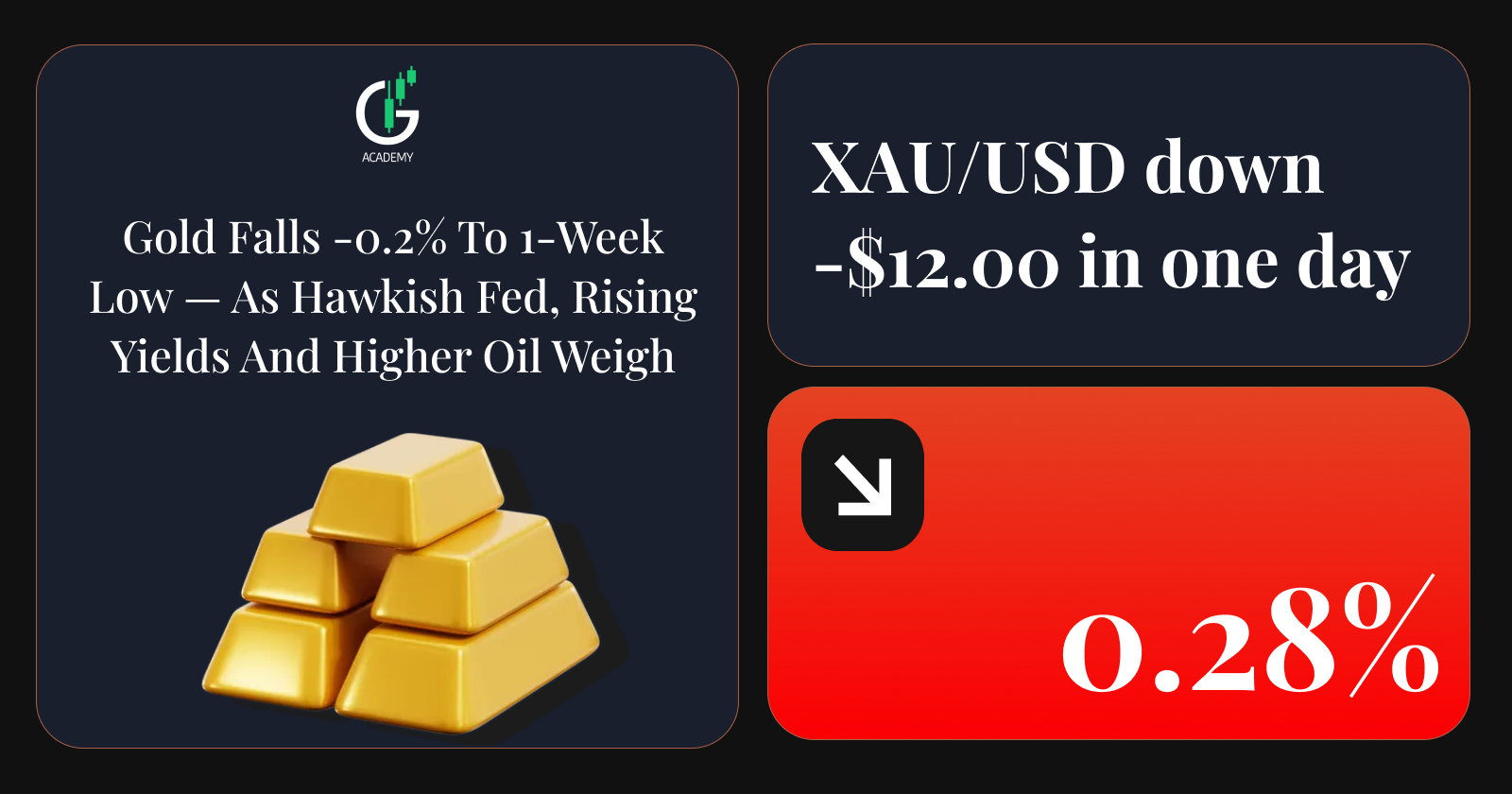
🥇 Gold Falls to One-Week Low as Hawkish Fed, Rising Yields and Higher Oil Weigh
📈 Technical Analysis of XAU/USD
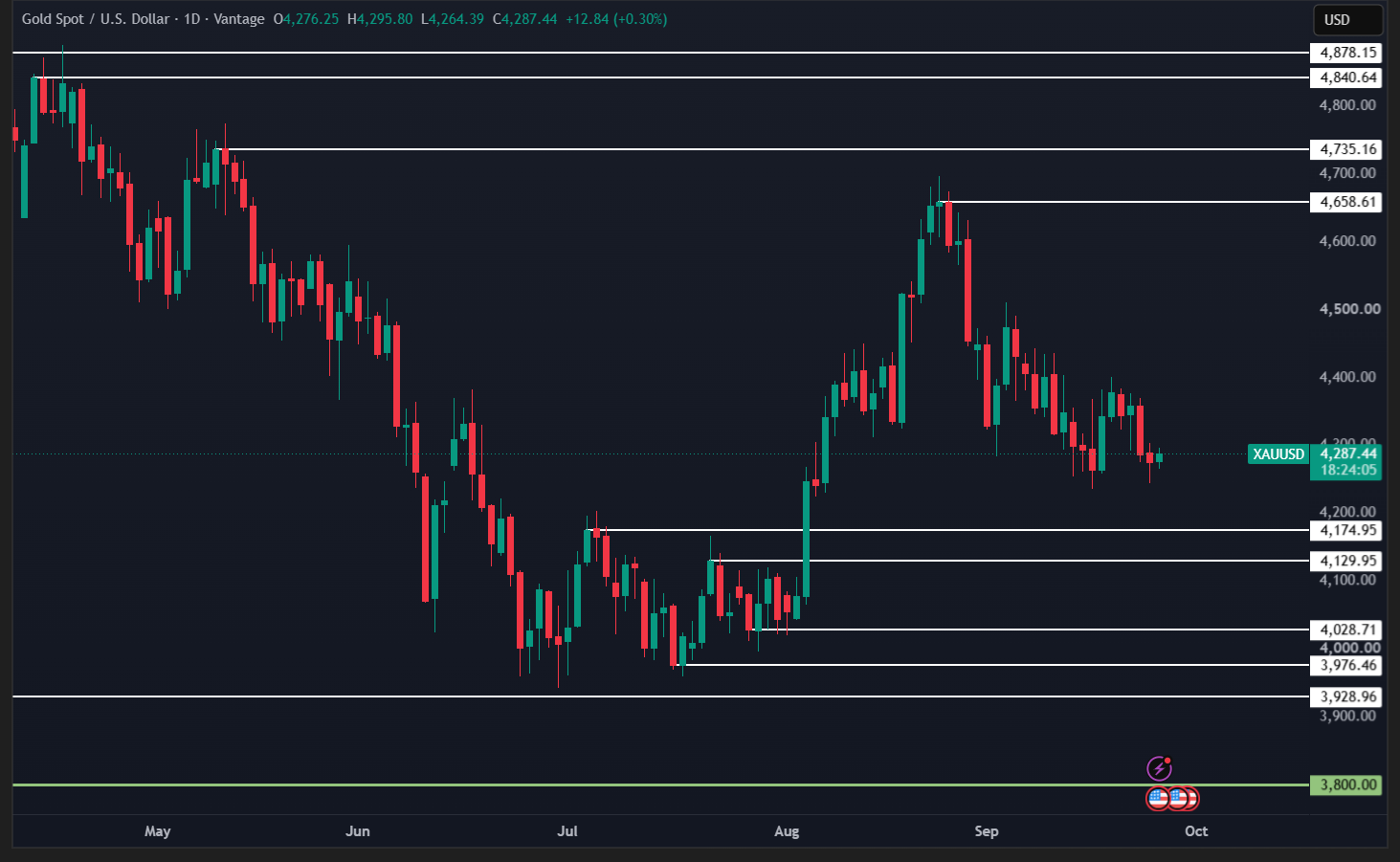
XAU/USD remains under selling pressure after extending its bearish correction, with recent attempts to recover toward the 4,350–4,400 area failing to produce a sustained rebound and gold remaining near its recent September lows.
RSI (14) at 43.52 reflects bearish momentum, with the reading remaining below the neutral 50 level while not yet indicating oversold conditions, leaving room for further downside pressure.
MACD maintains a bearish signal, with the histogram moving further into negative territory and indicating that downward momentum is strengthening.
The EMA structure reinforces the bearish trend: price remains below the 20 and 50 EMAs and is breaking below the 100 EMA, while the 200 EMA remains well above price, keeping the longer-term structure bearish. Gold is also trading in the lower half of the Bollinger Bands and moving closer to the lower band.
A recovery above $4,335 resistance could strengthen a bullish rebound and eventually bring $4,660 back into focus. Continued rejection below the EMA resistance zone could instead expose major support at $4,175, followed by $4,130 if selling pressure accelerates.
📋 Overview
Gold fell to its lowest level since September 16, dropping toward the $4,250 region during Thursday's session before buyers stepped in and drove a partial recovery.
Strong US economic data and hawkish Federal Reserve signals strengthened expectations for another rate hike, pushing the US Dollar to a two-month high while the 10-year Treasury yield climbed to around 5.16%.
Higher oil prices added to inflation concerns, with renewed supply disruption fears following a Houthi missile attack on Saudi Arabia reinforcing expectations that US monetary policy may need to remain restrictive.
🔎 What Drove The Gold Price Down?
Hawkish Fed Expectations: The Fed raised rates by 25 basis points last week, while subsequent comments from policymakers kept further tightening on the table. Market expectations for another October hike increased sharply, reducing demand for non-yielding gold.
Strong US Economic Data: September's S&P Global Composite PMI unexpectedly climbed to 58.4, a five-year high, while Initial Jobless Claims fell to 197K versus 201K expected, reinforcing the view that the US economy can withstand tighter monetary policy.
Treasury Yields Surged: The US 10-year Treasury yield climbed to around 5.16%, its highest level since 2007, while the two-year yield traded near 4.91%. Higher yields increased the opportunity cost of holding non-interest-bearing gold.
US Dollar Reached a Two-Month High: The Dollar Index strengthened to around 101.37, making dollar-denominated gold more expensive for buyers using other currencies and adding further pressure to bullion.
Higher Oil Added to Inflation Risks: Oil rose around 2% after the Houthi missile attack on Saudi Arabia renewed supply concerns. Higher energy costs increased inflation risks and strengthened the argument for additional Federal Reserve tightening.