🥇 Gold Consolidates Near $4,135 as Stronger Dollar and Rising Treasury Yields Pressure Prices
📈 Technical Analysis of XAU/USD
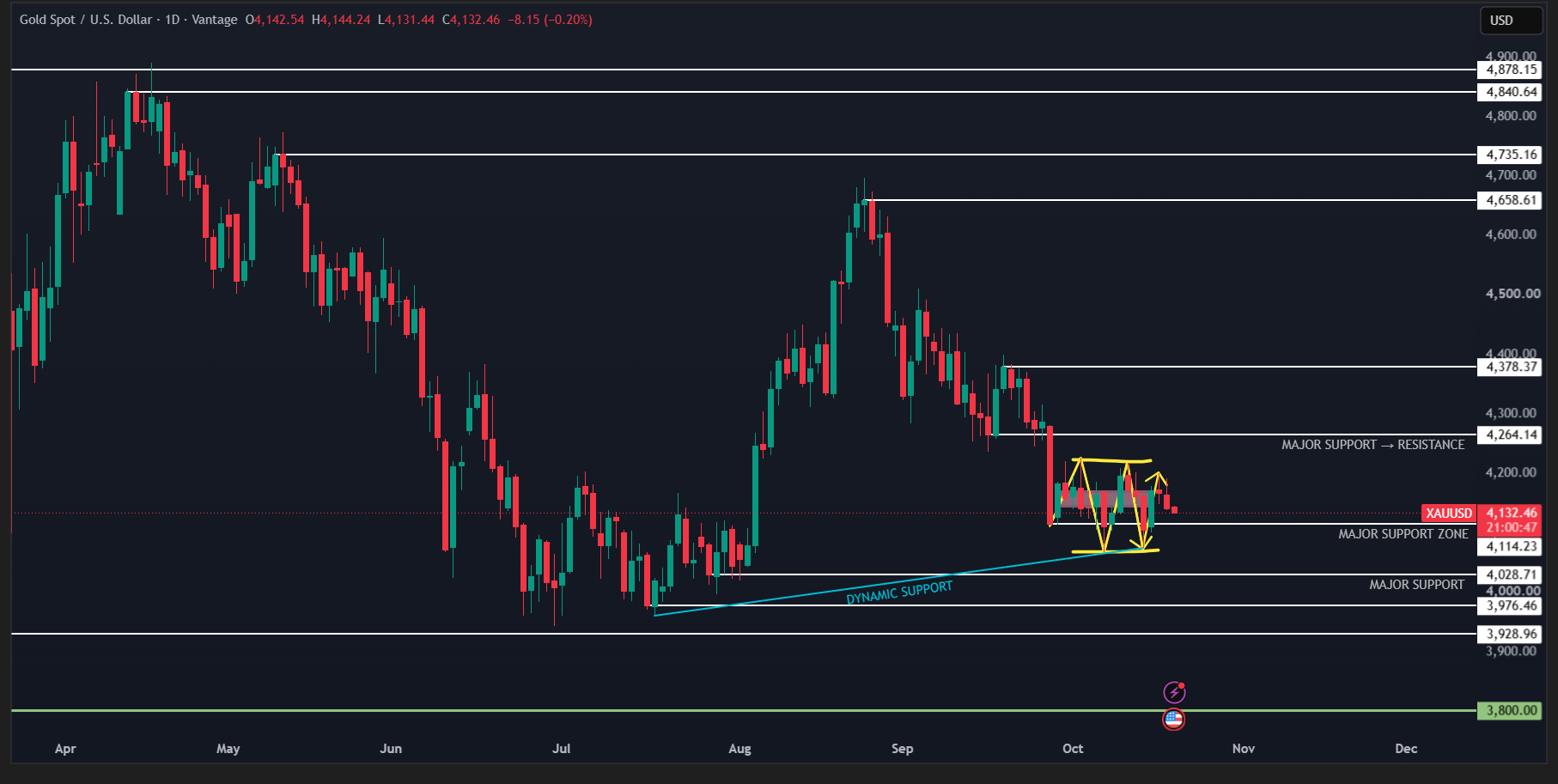
XAU/USD maintains a bearish broader technical bias, trading around 4,135 as buyers continue defending the important 4,115 support zone. Gold remains within a consolidation range following its recent decline, with repeated attempts to recover encountering selling pressure. The broader bearish structure remains intact while prices trade below the major 4,265 resistance level.
RSI (14) at 43.19 indicates persistent bearish momentum, remaining below the neutral 50 level but above oversold territory. This suggests sellers continue to maintain an advantage, although the indicator has not reached levels associated with extreme selling pressure.
MACD suggests weakening downside momentum: The MACD remains in negative territory but is positioned above its signal line, while the positive histogram indicates that bearish momentum has eased. This suggests selling pressure may be stabilising, potentially allowing a short-term recovery if buyers maintain support.
Moving averages reinforce the broader bearish technical structure: Gold continues trading below the 20, 50, 100 and 200 EMAs, confirming that sellers remain in control of the broader trend. The 20 and 50 EMAs provide immediate dynamic resistance, while the longer-term averages reinforce the bearish outlook.
Bollinger Bands indicate declining volatility and consolidation: Gold remains in the lower half of the Bollinger Bands, reflecting continued bearish pressure. However, narrowing band width suggests volatility is decreasing as prices consolidate near support, potentially preceding a stronger directional move.
4,265 remains the major resistance bulls need to reclaim, with a sustained breakout potentially exposing 4,380. Conversely, a confirmed breakdown below the 4,115 support zone could trigger renewed selling toward 4,030, followed by 3,975. The 3,930 level remains an additional downside support.
📋 Overview
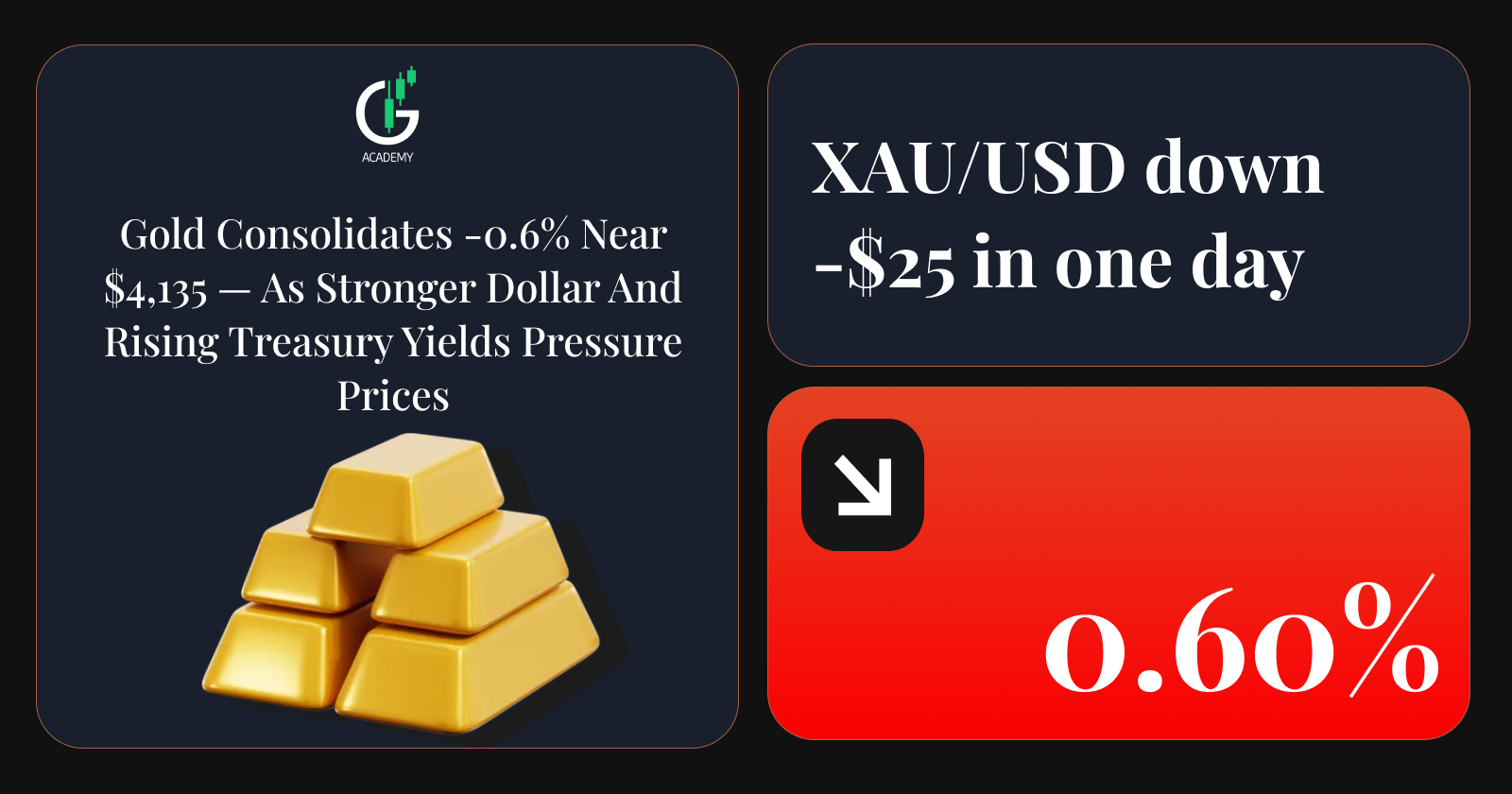
Gold declined approximately 0.4% toward $4,140 on Monday, as a stronger US dollar and rising Treasury yields reduced demand for the precious metal. The latest price action shows XAU/USD consolidating around 4,135, keeping the important 4,115 support zone in focus.
US dollar strength, higher bond yields and Federal Reserve policy expectations weighed on gold. Markets continued to anticipate unchanged interest rates at the October meeting, while concerns about persistent inflation and potential monetary tightening later in the year reinforced pressure on non-yielding assets.
XAU/USD remains below all four major EMAs, maintaining a bearish broader technical structure despite signs of stabilising downside momentum. A sustained recovery above 4,265 resistance could open the way toward 4,380, while a breakdown below 4,115 support could expose 4,030 and 3,975.
🔎 What Drove The Gold Price Down?
Stronger US Dollar Reduced Gold Demand: The US dollar strengthened, making dollar-denominated gold more expensive for international buyers. This reduced demand for the precious metal and contributed to Monday's decline toward 4,140.
Rising US Treasury Yields Increased Selling Pressure: Higher US government bond yields increased the opportunity cost of holding non-interest-bearing gold. As yields rose, interest-bearing assets became relatively more attractive, placing additional pressure on gold prices.
Federal Reserve Interest-Rate Expectations Weighed on Gold: Markets increasingly anticipated that the Federal Reserve would leave interest rates unchanged at its October meeting, while attention shifted toward the possibility of additional monetary tightening later in the year. Expectations of restrictive monetary policy continued to limit gold's recovery.
Persistent Inflation Concerns Reinforced Monetary Policy Uncertainty: Elevated energy prices raised concerns that US inflation could remain above the Federal Reserve's target. Persistent inflation pressures increased uncertainty surrounding future interest-rate decisions, contributing to cautious sentiment toward gold.
Upcoming US Inflation Data Encouraged Cautious Positioning: Investors remained cautious ahead of additional US inflation releases, particularly the Personal Consumption Expenditures (PCE) report. The upcoming data could influence expectations for Federal Reserve policy, limiting buying interest as markets awaited further clarity.