🥇 Gold Breaks Below $4,000 as Rising Oil Prices and Fed Rate Hike Expectations Accelerate Selling
📈 Technical Analysis of XAU/USD
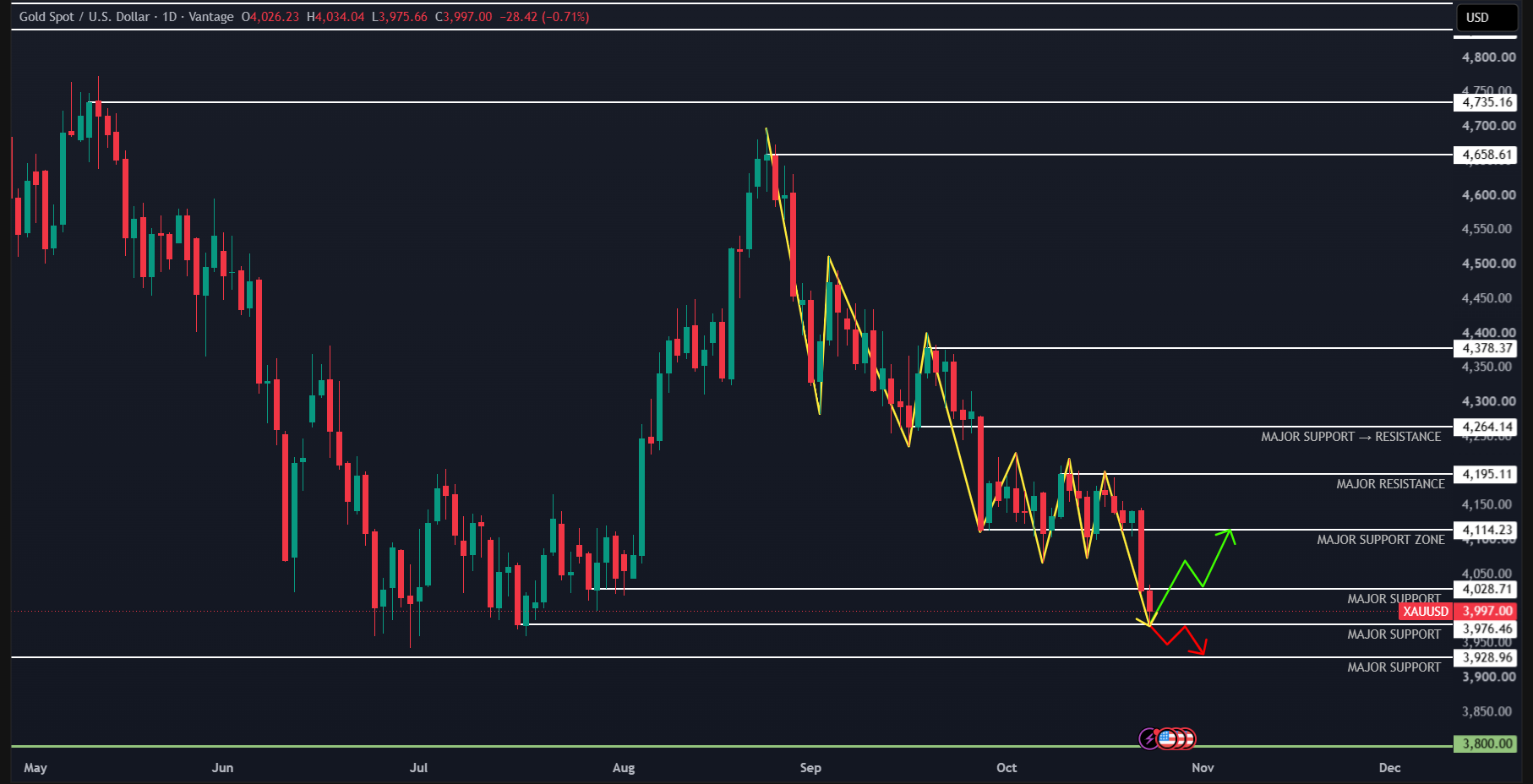
XAU/USD maintains a strong bearish technical bias, trading around 3,997 after breaking below the psychological 4,000 level and the former 4,030 and 4,115 support zones. Gold reached an intraday low near 3,975, reinforcing the broader downward trend characterised by lower highs and lower lows. The breakdown has shifted attention toward the 3,975 support region, while 4,030 now represents immediate resistance.
RSI (14) at 33.35 indicates sustained bearish momentum, approaching the oversold threshold of 30. This suggests sellers remain firmly in control, although the indicator's proximity to oversold territory increases the possibility of a temporary corrective rebound following the recent decline.
MACD confirms strengthening bearish momentum: The MACD line remains below its signal line, while the negative histogram continues expanding. This indicates selling pressure is accelerating, reinforcing the likelihood of further downside if buyers fail to defend the current support region.
Moving averages reinforce the broader bearish technical structure: Gold continues trading below the 20, 50, 100 and 200 EMAs, confirming bearish conditions across short-, medium- and longer-term trends. These moving averages now represent layers of potential dynamic resistance, potentially limiting recovery attempts.
Bollinger Bands indicate expanding downside volatility: Gold has broken below the lower Bollinger Band, while the bands continue widening. This reflects increasing volatility and strong selling pressure following the recent breakdown. However, the extended move below the lower band also raises the possibility of a temporary corrective rebound.
3,975 remains the immediate support level buyers need to defend, with a sustained breakdown potentially exposing 3,930, followed by 3,800. Conversely, a recovery above 4,030 could open the way toward 4,115, although a sustained move above 4,195 would be needed to challenge the broader bearish structure.
📋 Overview
Gold declined toward $3,997 on Friday, reaching a three-month low near 3,975 and extending its weekly decline to approximately 4%, its steepest since June. The precious metal broke below the psychological 4,000 level, reinforcing the broader bearish trend.
Rising oil prices, stronger Federal Reserve rate hike expectations and selling pressure across financial markets weighed on gold. Escalating Middle East energy supply risks increased inflation concerns, while markets priced approximately a 78% probability of a December interest-rate increase, limiting demand for non-yielding assets.
XAU/USD remains below all four major EMAs, confirming the broader bearish technical structure. The breakdown below 4,030 has shifted attention toward 3,975 support, with further downside potentially exposing 3,930 and 3,800. A recovery above 4,030 could encourage a corrective move toward 4,115.
🔎 What Drove The Gold Price Down?
Rising Oil Prices Increased Inflation Concerns: Escalating Houthi attacks in Saudi Arabia pushed crude oil prices higher, raising concerns about potential energy supply disruptions. Higher energy costs increased fears of another wave of inflation, weighing on gold as investors reassessed the outlook for US monetary policy.
Federal Reserve Interest-Rate Expectations Pressured Gold: Markets increasingly anticipated that US interest rates would remain elevated as persistent inflation concerns reinforced expectations of restrictive monetary policy. Higher interest rates increase the opportunity cost of holding non-yielding gold, reducing its relative attractiveness.
December Rate Hike Expectations Reinforced Selling Pressure: Traders priced approximately a 78% probability of a December Federal Reserve interest-rate increase, although the October 27–28 meeting was expected to leave rates unchanged. Expectations of further monetary tightening contributed to gold's decline below 4,000.
Technology Stock Selloff Triggered Additional Gold Liquidation: Losses across technology shares increased financial-market volatility, triggering margin calls and forcing some investors to liquidate gold holdings to raise cash. This selling pressure contributed to gold's decline toward 3,975, despite its traditional safe-haven appeal.
Upcoming US Inflation Data Encouraged Cautious Positioning: Investors shifted their attention toward the October 29 US Personal Consumption Expenditures (PCE) inflation report, which could provide further guidance on the Federal Reserve's interest-rate outlook. Uncertainty surrounding the upcoming data reinforced cautious market sentiment as gold traded below 4,000.