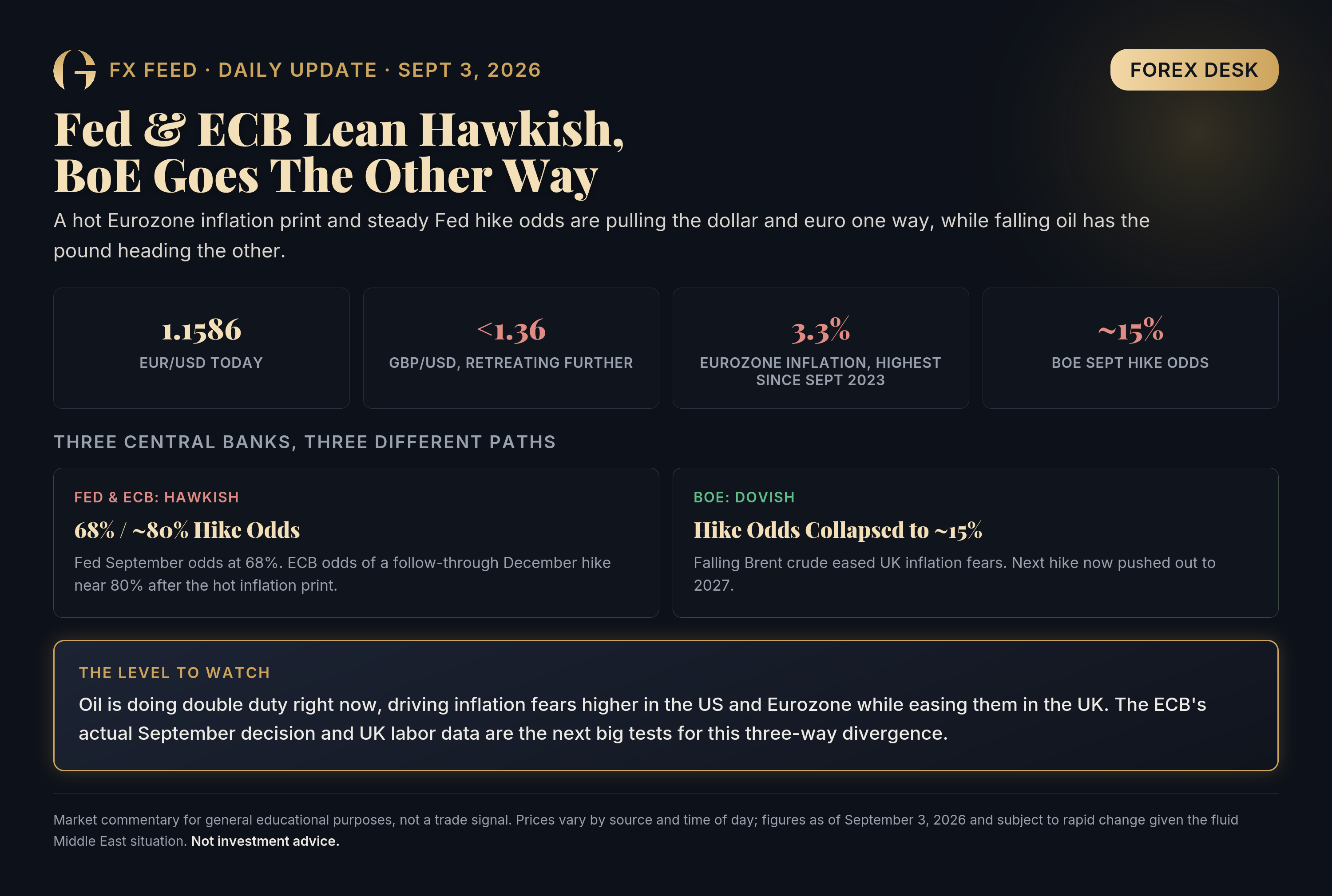
Fed and ECB Both Lean Hawkish, BoE Goes the Other Way
The divergence we flagged earlier this week between the Fed/ECB and the Bank of England has sharpened. Today's data makes the split even clearer.
Where the Majors Sit Right Now
EUR/USD: 1.1586, essentially flat on the day (-0.02%), holding near recent lows
GBP/USD: fell below $1.36, retreating further from last week's six-month highs
The Eurozone Just Got a Hot Inflation Print
Eurozone annual inflation jumped to 3.3% in August, its highest level since September 2023 and well above the ECB's 2% target, driven largely by a surge in energy prices tied to the ongoing Middle East conflict.
That's pushed ECB rate-hike expectations up meaningfully. Markets are now pricing the ECB's deposit rate at around 2.70% by December, which implies roughly an 80% probability of a second hike following an expected move this month. ECB policymakers Olli Rehn and Martin Kocher have both explicitly warned that a prolonged conflict and rising inflation risk could warrant further tightening.
Meanwhile, Fed rate-hike odds for September have ticked up to 68%, up slightly from 66% earlier this week, still anchored by Kevin Warsh's hawkish tone and the same oil-driven inflation story.
The Pound Is Going the Opposite Direction, Again
Here's the divergence, and it's gotten sharper since our last update. UK-specific data is now telling a genuinely different story from the Fed and ECB:
Falling Brent crude prices have eased UK inflation concerns specifically
BoE rate-hike expectations for the September meeting have collapsed to roughly a 15% probability (LSEG pricing shows less than 4 basis points of tightening priced in)
Most economists now expect the BoE to hold rates at 3.75% for the rest of the year
Markets have pushed the next expected BoE hike all the way out to 2027
UK inflation did rise to 2.9% in July on higher energy bills, but the labor market remains subdued, giving the BoE more room to sit still than either the Fed or ECB currently have.
Why This Divergence Matters
Three central banks, one shared geopolitical shock (the Iran conflict and its effect on oil), and three different policy reactions. The Fed and ECB are both leaning toward tightening because their inflation readings are running hot. The BoE is leaning the other way because, for the UK specifically, falling oil prices have actually cooled inflation concern rather than adding to it. That's the kind of divergence that historically widens interest-rate differentials, and interest-rate differentials are one of the most reliable drivers of currency direction over the medium term.
What to Watch
The ECB's actual September decision. With an 80% probability of a follow-through hike already priced for December, the market has limited patience for anything less hawkish than expected.
UK labor market data. If it stays subdued as expected, it reinforces the case for the BoE staying on hold; any surprise strength could reopen the door to hike bets the market has now largely closed.
Oil prices specifically. They're doing double duty right now, driving inflation fears higher in the US and Eurozone while simultaneously easing them in the UK, a genuinely unusual three-way split worth tracking closely.