Deep Dive: Zoom and the Anthropic IPO Trade
Buying Zoom ahead of the Anthropic IPO is a way to own an indirect piece of Anthropic before it trades. Zoom holds a stake it valued at $3.13 billion, about 11% of its $28.6 billion market value, so its stock reacts to how the market values Anthropic. The thesis is to buy Zoom ahead of the IPO and sell into the news. This report lays out the facts, the precedent, the math and the risks.
The IPO in Brief
Anthropic launched its roadshow on November 10 and set the terms below. The range is preliminary until pricing.
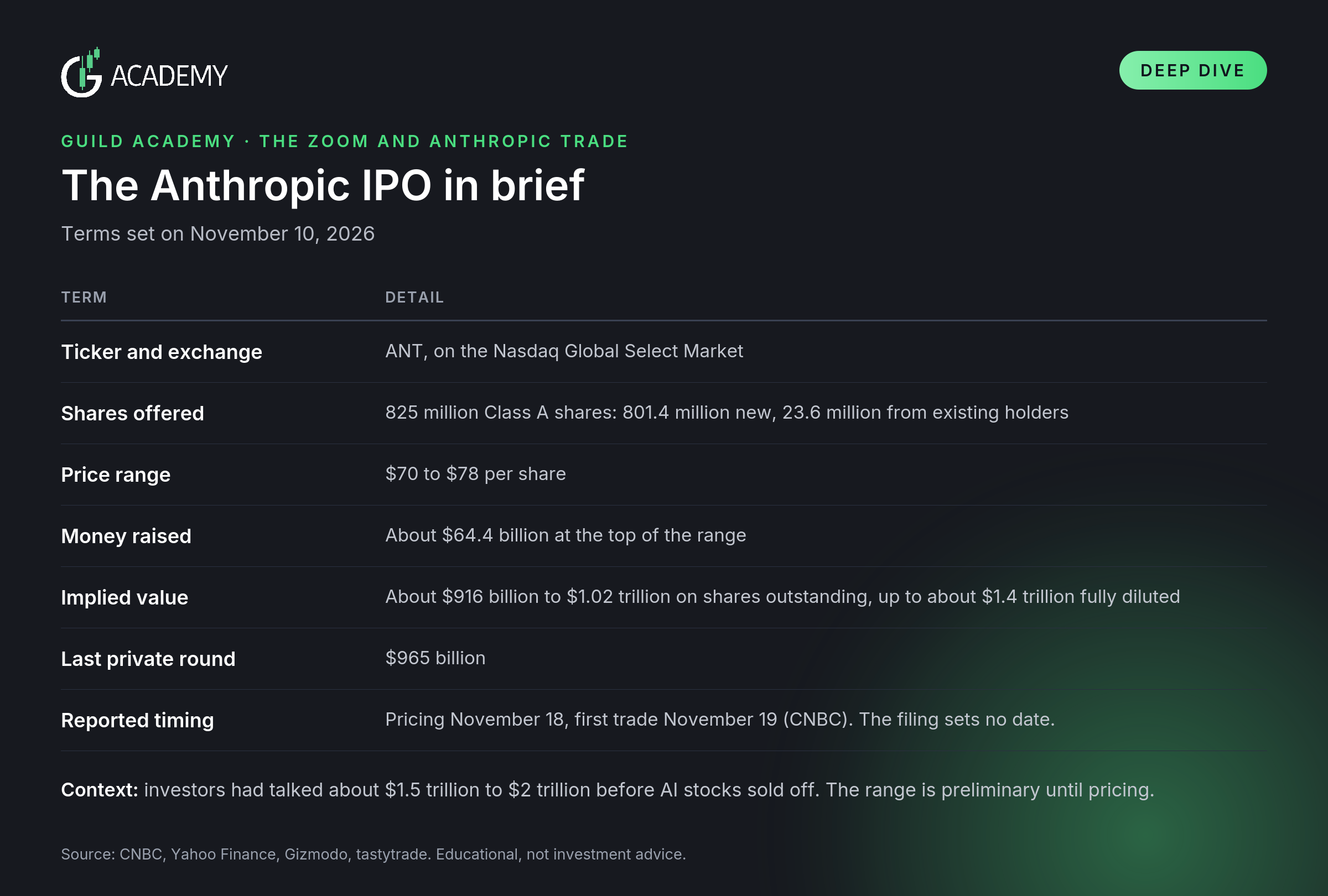
The valuation has come down from earlier hopes. Investors had talked about $1.5 trillion to $2 trillion before AI stocks sold off, and the range now sits well below that.
The Ford and Rivian Precedent
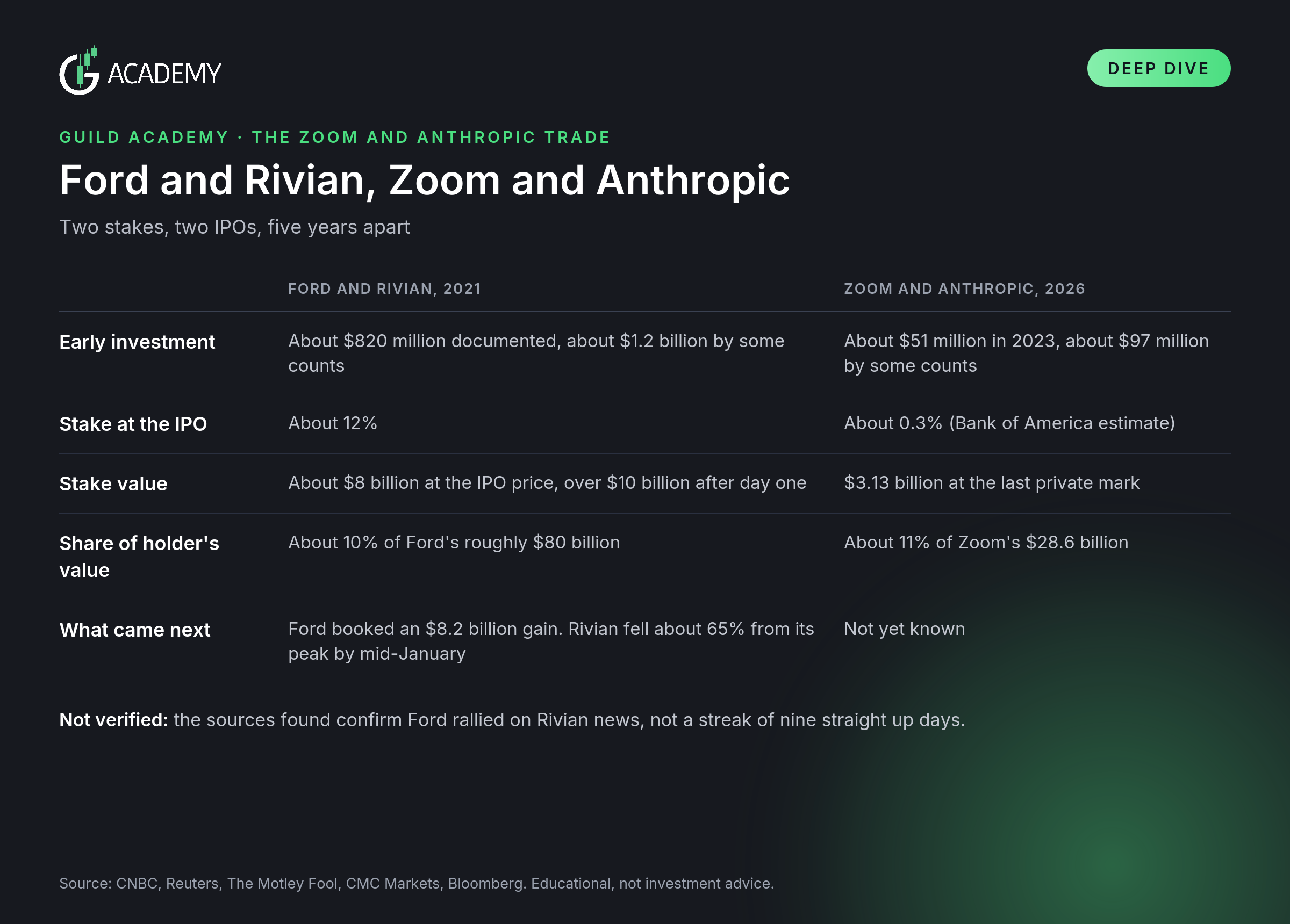
Ford invested in Rivian years before its 2021 IPO. At the IPO price of $78 a share, Ford's stake was worth about $8 billion, roughly $2 for each Ford share, and after the first day of trading it was worth more than $10 billion. The market bid Ford up in anticipation: in 2020, when Rivian raised money at a $27.6 billion valuation, Ford shares rose nearly 25% in three days. Investors priced the stake in before the IPO, and then discounted it for taxes and the lockup.
How Exposed Zoom Is
Zoom first invested in Anthropic in May 2023 through its venture arm, about $51 million at the start and about $97 million by some counts. Its stake was carried at $1.27 billion on April 30, 2026, and at $3.13 billion on July 31, after a $1.61 billion gain in a single quarter. Bank of America estimates the stake at about 0.311% of Anthropic. At Wednesday's close, Zoom's market value was $28.6 billion on 291.78 million shares, so the stake equals about 11% of it.
Many public companies hold Anthropic stock, but few hold enough to matter to their own share price:
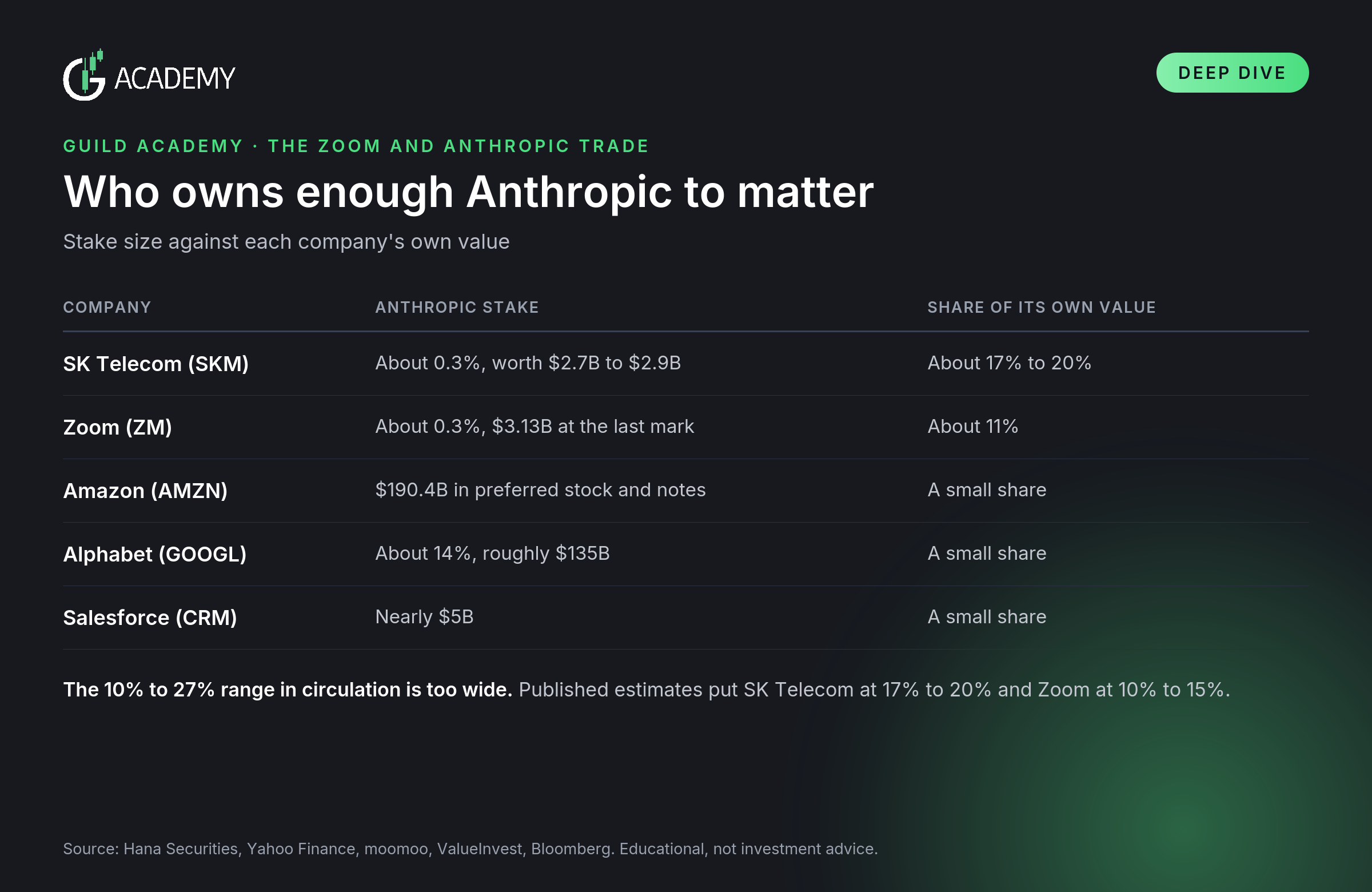
Zoom and SK Telecom are the two names where the stake is large against the company. Published estimates put SK Telecom at about 17% to 20% of its market value and Zoom at about 10% to 15%. The 26% figure for Zoom came from one analyst scenario that assumed Anthropic would be valued above $2 trillion at the IPO, which is well above the current range.
What Each Dollar Means for Zoom
The math is simple enough to do by hand. Zoom's $3.13 billion mark came from Anthropic's $965 billion valuation, which puts Zoom's stake at about 0.324% of the company. With about 12.29 billion Anthropic shares outstanding before the offering, that is roughly 39.9 million shares. Multiply by any Anthropic price to get the stake's value, then divide by Zoom's 291.78 million shares.
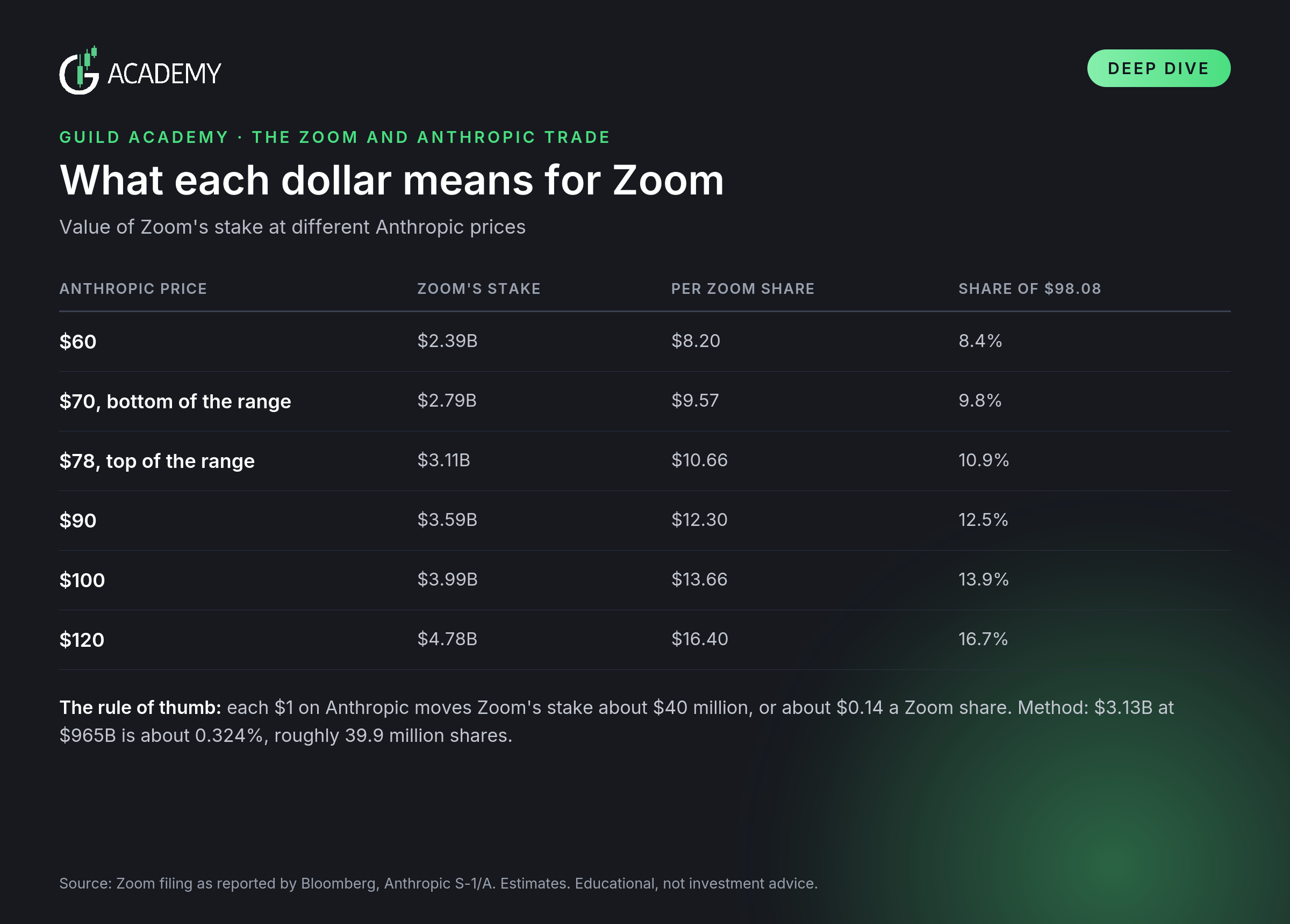
Each $1 on Anthropic's price moves Zoom's stake by about $40 million, or about $0.14 per Zoom share. A $10 move in Anthropic is worth about $1.40 on Zoom, or about 1.4% of its price.
The table shows why the thesis depends on the IPO price. The last private round works out to about $78 to $79 a share if its $965 billion was measured on shares outstanding, which is the top of the IPO range. On that measure, the IPO is roughly flat against Zoom's existing mark, not a step up. Measured on a fully diluted basis, the range implies up to $1.4 trillion, which would be a large step up. Zoom's next filing will show which basis its mark uses.
Two discounts apply to any headline figure. Zoom cannot sell its shares until the lockup ends, which is typically about six months, and it would pay tax on any gain when it does. The market tends to value a stake like this below its face value.
The Plan
The thesis is to buy the rumor and sell the news. Zoom tends to rise in the days before the IPO as investors price in the value of its stake, and especially if reports suggest Anthropic will price higher. The plan has four parts:
January calls on Zoom, with no strike above $130. This keeps the cost low and leaves time for the move.
Add on dips. If Zoom falls back to the opening price it saw on Wednesday, about $92, add to the position.
Closer to the money as the IPO nears. If Zoom is trading at $91 or below close to the IPO, use options closer to the money and with less time. They cost more but respond faster over a short window, and they decay faster.
Sell into the news. The exit is around the IPO, not months later. Shares are an alternative to options for the same idea.
The facts around Zoom:
Zoom closed Wednesday at $98.08, up 7.89%, after opening near $92. It had closed Tuesday at $90.91. The jump followed the launch of its AI Launchpad program, which offers startups up to $150,000 in credits for Zoom AI services.
The 52-week range is $70.70 to $114.74. The average analyst price target is about $118.58, and Mizuho's is $120.
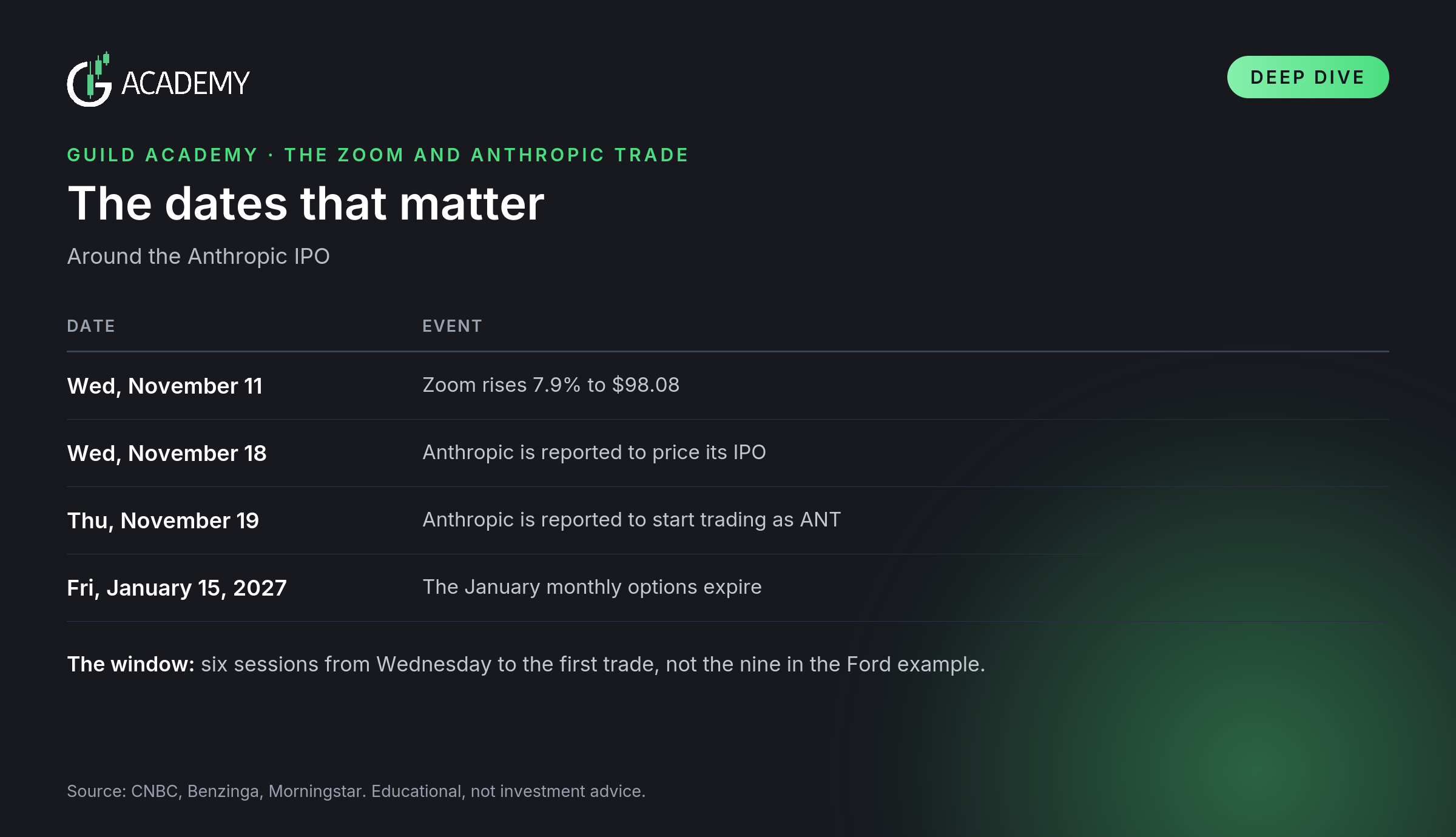
Where the thesis is strong: the stake is about 11% of Zoom's value, the IPO is a dated catalyst, the precedent shows stocks get bid up into stake-holder IPOs, and demand looks heavy, with a reported book already covered at the range and about 20% going to retail.
Where it is weak:
The window is short. From Wednesday to the first trade there are six sessions.
Zoom has already moved. It rose 7.9% in one day, so some of the news is in the price.
A $130 strike is far away. It sits about 33% above Wednesday's close and above the average analyst target, so the call needs a large move to pay.
The IPO may not be a step up. The range is close to the last private round on a shares-outstanding basis, so there may be little new value to price in.
Timing the exit. Selling around November 19 leaves most of a January option's time value intact, which helps, but the premium can drop quickly once the uncertainty is gone.
Risks
The IPO can change. The range is preliminary, and the filing sets no pricing date. A delay, a new range or a weak book would move Zoom immediately.
Valuation risk. Expectations have already fallen from talk of $2 trillion to about $1.4 trillion fully diluted, after a sell-off in AI stocks. A weak debut would hurt every proxy.
The stake is not cash. Zoom cannot sell until the lockup ends and would owe tax on gains. The $3.13 billion is an accounting mark.
Options can lose everything. A far strike needs a large move, and the whole premium can expire worthless.
Zoom has its own business. Its results and guidance matter, and insiders, including its chief executive, sold shares this month.
It is a single event trade. Everything rides on one date, and gains can reverse quickly once the news is out.
None of this is a recommendation to buy or sell anything. It is what the facts and the thesis suggest, so that existing plans can be reviewed with context.