Deep Dive: Utilities Are Down, Heavily Shorted, and Heading Into Their Strongest Season
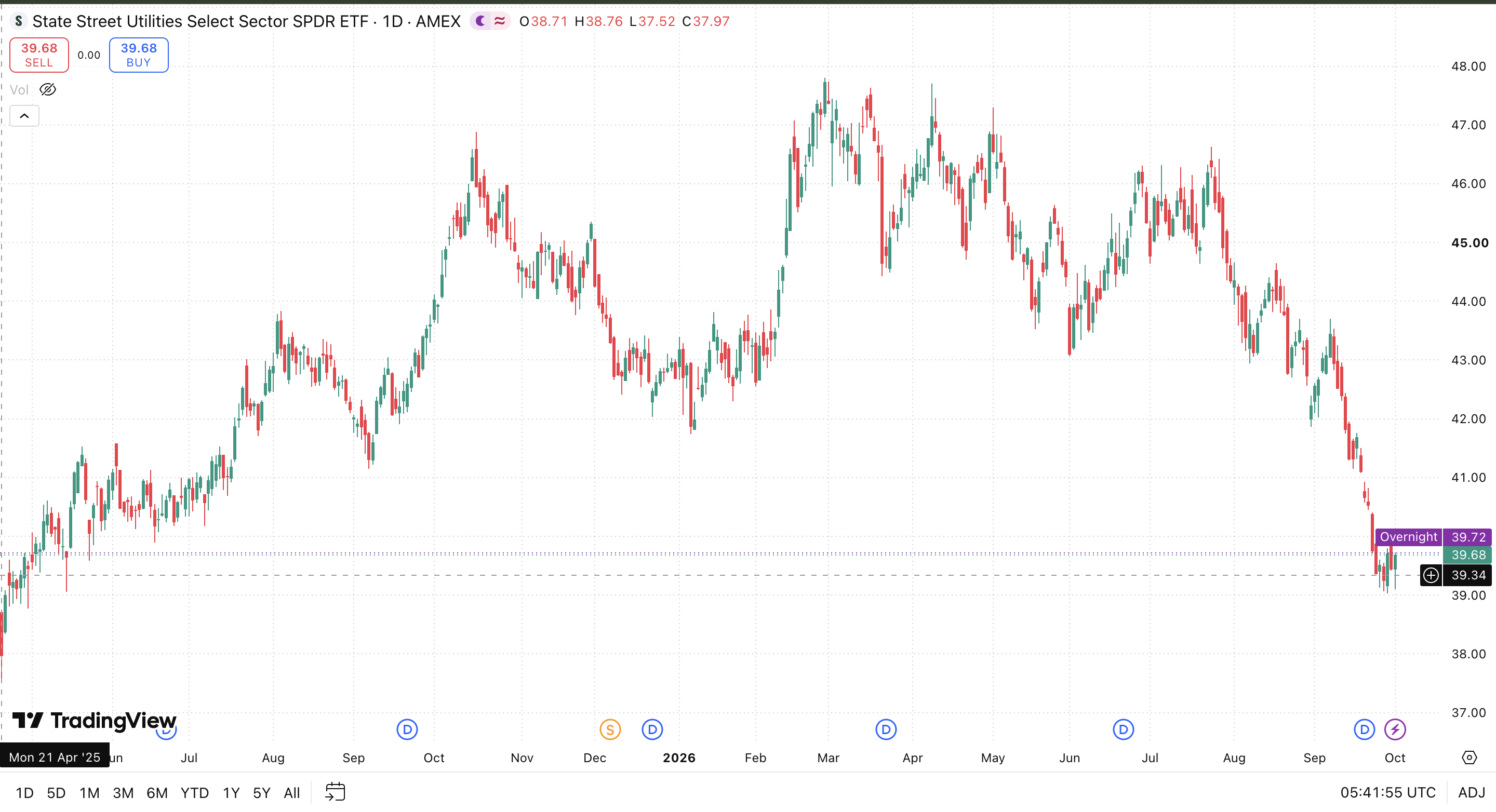
A setup is building in the utilities sector that's worth understanding, even if you never put on the trade. Utilities (XLU) is sitting on a real year-to-date decline, short interest in the fund has spiked sharply, and the calendar is about to turn toward the sector's historically strongest stretch.
A Sector Priced Like Bonds, Moving Like Bonds
Utilities are a bond proxy in practice, not just in theory. The companies that make up XLU, NextEra Energy, Southern Company, Duke Energy, Constellation, and a handful of others, generate steady, regulated cash flows and pay out dividends that behave a lot like bond coupons. That makes the sector's single biggest driver painfully simple: when Treasury yields rise, bonds become more attractive relative to utility dividends, and capital rotates out of names like these and into fixed income instead. When yields fall, the reverse happens. This is the textbook explanation for why XLU carries real interest-rate sensitivity as its defining risk, and it's exactly what's been playing out this year as yields have climbed.
The sector's own recent history makes the point. XLU lost over 7% in 2023, a year defined by aggressive rate hikes, a clean example of the mechanism in action.
Short Interest Has Spiked Sharply
Short interest in XLU jumped from roughly 26.5 million shares at the end of July to about 33.5 million shares by mid-August, a jump of better than 26% in a single two-week reporting window. That elevated positioning has largely held since, with short interest still sitting around 31-32 million shares as of mid-September, against a fund that typically takes only a day and a half of average volume to fully cover.
That's a meaningful bet against the sector stacked on top of an already difficult year. XLU opened its seasonally strong month of July with a decline instead, down roughly 2% against a historical July average closer to positive 1%, and has continued sliding from there toward a double-digit decline from its summer level.
The Calendar Is About to Turn in Utilities' Favor
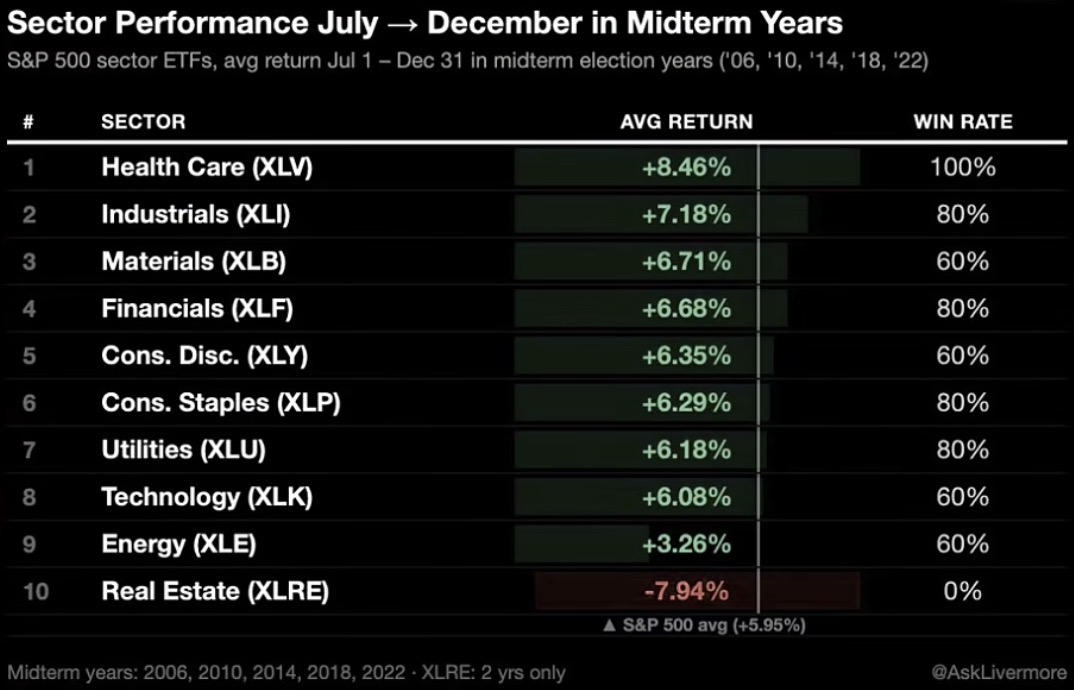
Here's where the setup gets interesting. Utilities have one of the more consistent seasonal track records of any sector in the market, and the strength is concentrated in exactly the months now approaching:
October has been positive in 19 of the last 25 years for XLU, a 76% win rate that ranks among the strongest sector-month combinations anywhere in the S&P 500
December has closed positive in 75% of the last 25 years
The broader July-through-October window has historically marked a period of seasonal strength for the sector overall, tied to easing summer borrowing costs and rising electricity demand
Layer a heavily shorted, beaten-down sector on top of a historically strong seasonal window, and you get the setup: if utilities catch even a modest bid as the calendar turns, the unwind of this year's short positioning could add real fuel to the move.
Reading the Trade Correctly
It's worth being precise about the mechanism here. An ETF cannot be mechanically short-squeezed the way an individual stock can, authorized participants can create new shares on demand when buying pressure shows up, so there's no fixed supply to get trapped against. What's actually in play is short covering: a wave of shorts buying back their positions to close them out, which can still move price meaningfully even without the textbook squeeze dynamics of a single, illiquid stock.
The structural ingredients are real: elevated short interest, a rate-sensitive sector trading well below its summer levels, and a seasonal tailwind arriving on schedule. Whether that combination resolves into a genuine rally is the open question, and it will likely come down to where yields head next more than anything else.
This is market and sector commentary for general educational purposes, not investment advice or a trading signal. All figures above come from public market data (short interest reporting, ETF research providers, and historical seasonality data) as of September 2026, and are subject to change. Past seasonal performance does not guarantee future results.