Deep Dive: The Cyber Wave and the Week That Could Test It
Three headline events hit on Friday, November 13, and none of them was confirmed as a hack. The bigger story for markets is quieter: the count of newly published software vulnerabilities is running near last month's record. This report lays out what happened, what the vulnerability numbers show, how cyber stocks are positioned and what the week ahead holds.
What Happened on Friday
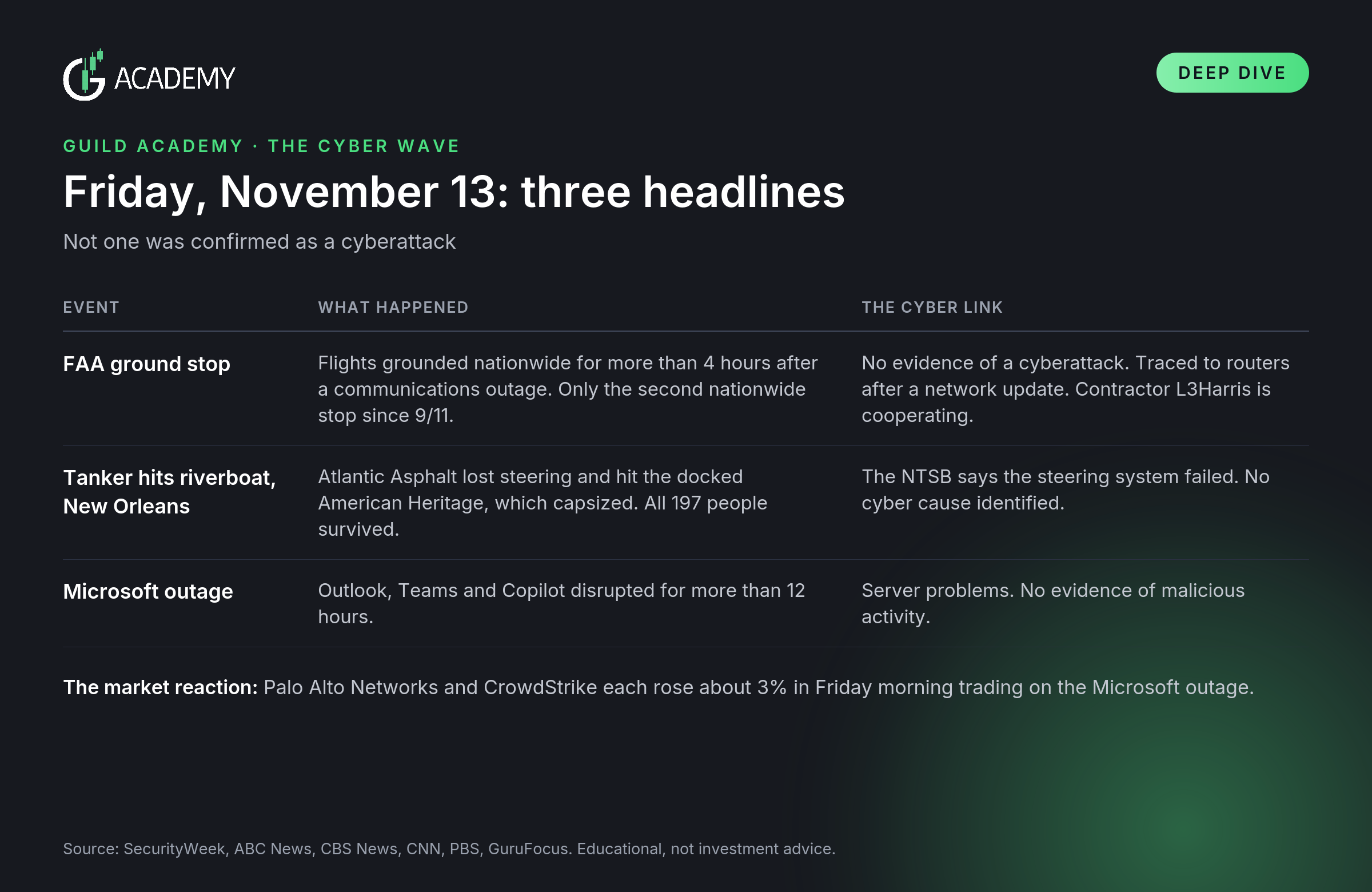
None of the three was a confirmed cyberattack, but markets treated them as a reminder. Palo Alto Networks and CrowdStrike each rose about 3% in Friday morning trading on the Microsoft outage.
There are real maritime cyber cases from this year. A crude carrier reportedly lost communications for about 30 hours in August, and a tanker lost systems and data in an incident reported by the International Marine Contractors Association on November 5. Neither is linked to the New Orleans collision.
The Vulnerability Tracker
The measure to watch is how many software vulnerabilities are published each month as CVE records. October was a record, and November is running close to it:
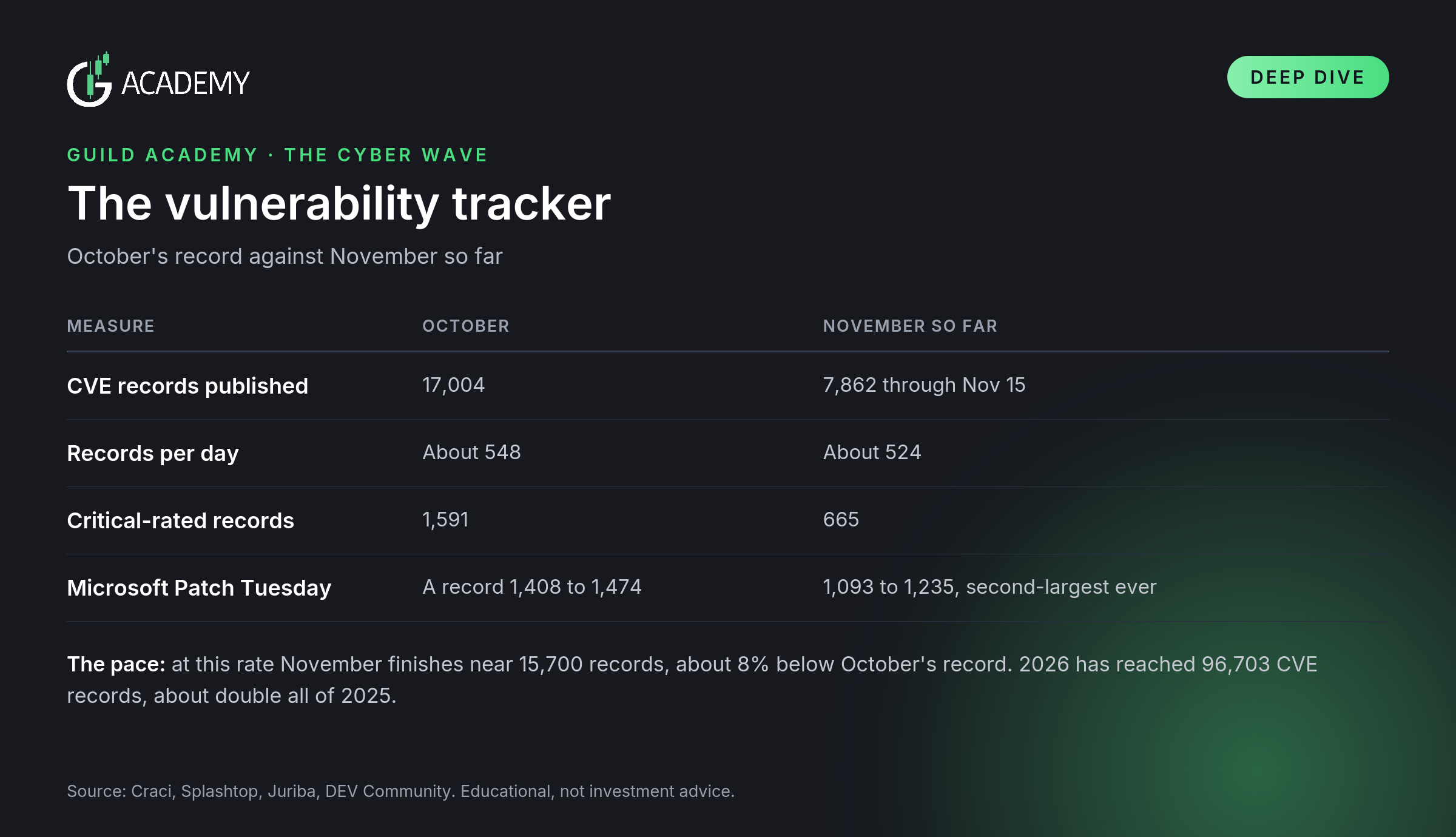
At the current pace November would finish near 15,700 records, about 8% below October's record. So the public count is holding near the record, not yet beating it. For context, 2026 has already reached 96,703 CVE records, about double all of 2025.
Reserved vulnerabilities. A CVE number can be reserved before its technical details are published. One tracker that watches this, rbptracker.org, listed 1,983 IDs on October 5 that were already public somewhere but still marked reserved in the official list, with a median of 80 days. About 85% were 2026 IDs, and the count is a floor. Separately, 61 of 1,734 entries in the US government's known-exploited list were added while their CVE was still reserved.
How Cyber Stocks Are Positioned
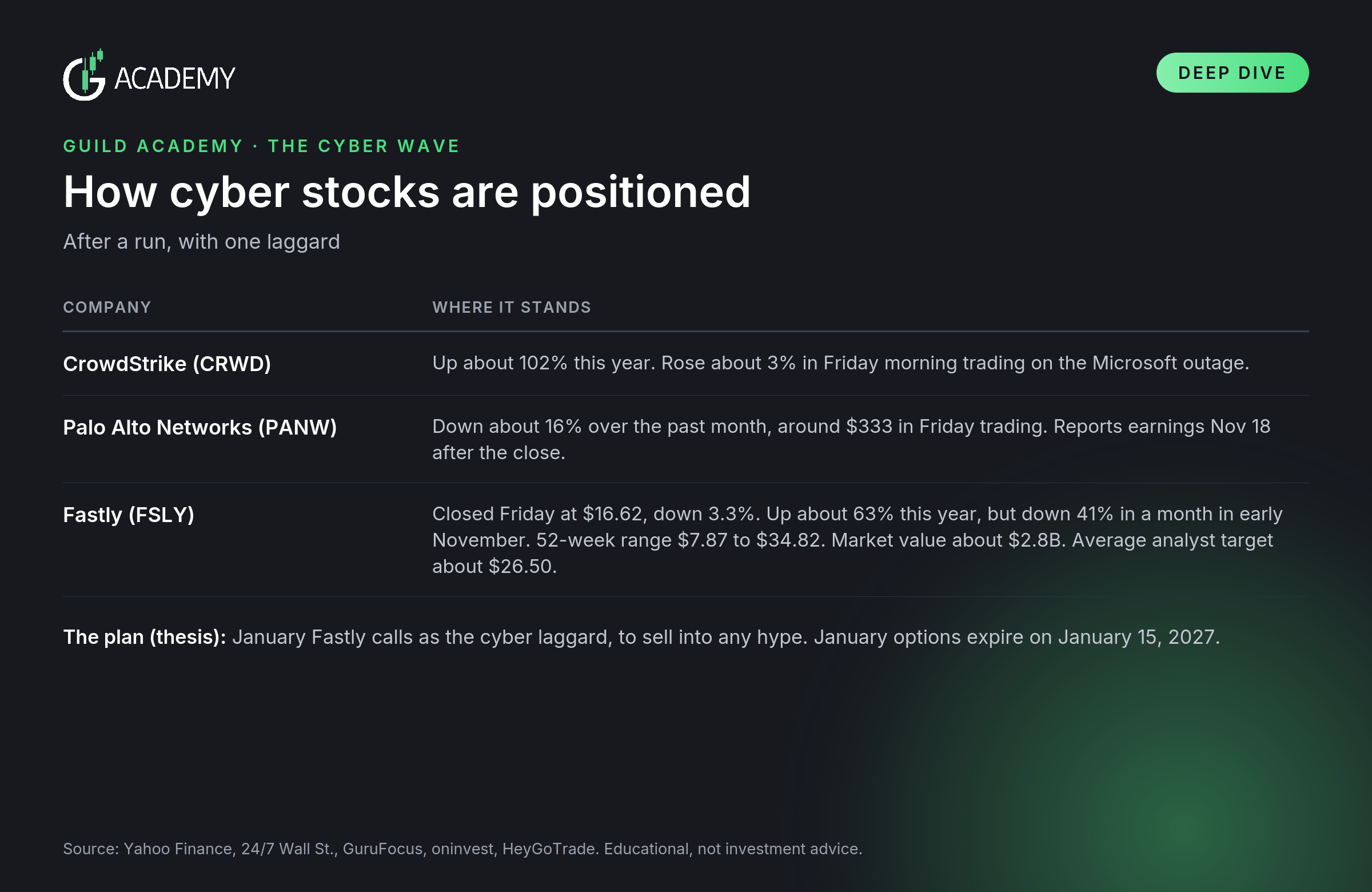
Cyber stocks have been the market's reaction trade to outages and breaches, and the group is already well above where it started the year. That matters for the plan, because a lot of good news is in the prices.
The Plan
The thesis is that another wave of cyber stocks is coming, like the last few, but that it will trade differently because the way these events are reported has changed. The issues did not stop after October. What stopped is how publicly they are discussed. A hack or disruption can start a run of hype and can also end one.
After the Anthropic IPO. Expects more cyber reports, or fixes, to come out once the IPO is done.
Synthetic IPO plays stay. Zoom and SK Telecom remain the main ways to trade the IPO, as laid out in the earlier Zoom report.
Fastly as the cyber laggard. On Friday, before the FAA and boat news, I bought January Fastly calls, expecting to sell them into any hype.
The case for Fastly is that it has fallen while the rest of the group has risen, so it has the most room to catch up. The case against it is its small size, customer concentration, continuing net losses and a stock that moved 41% in a month. January options expire on January 15, 2027.
The Week Ahead
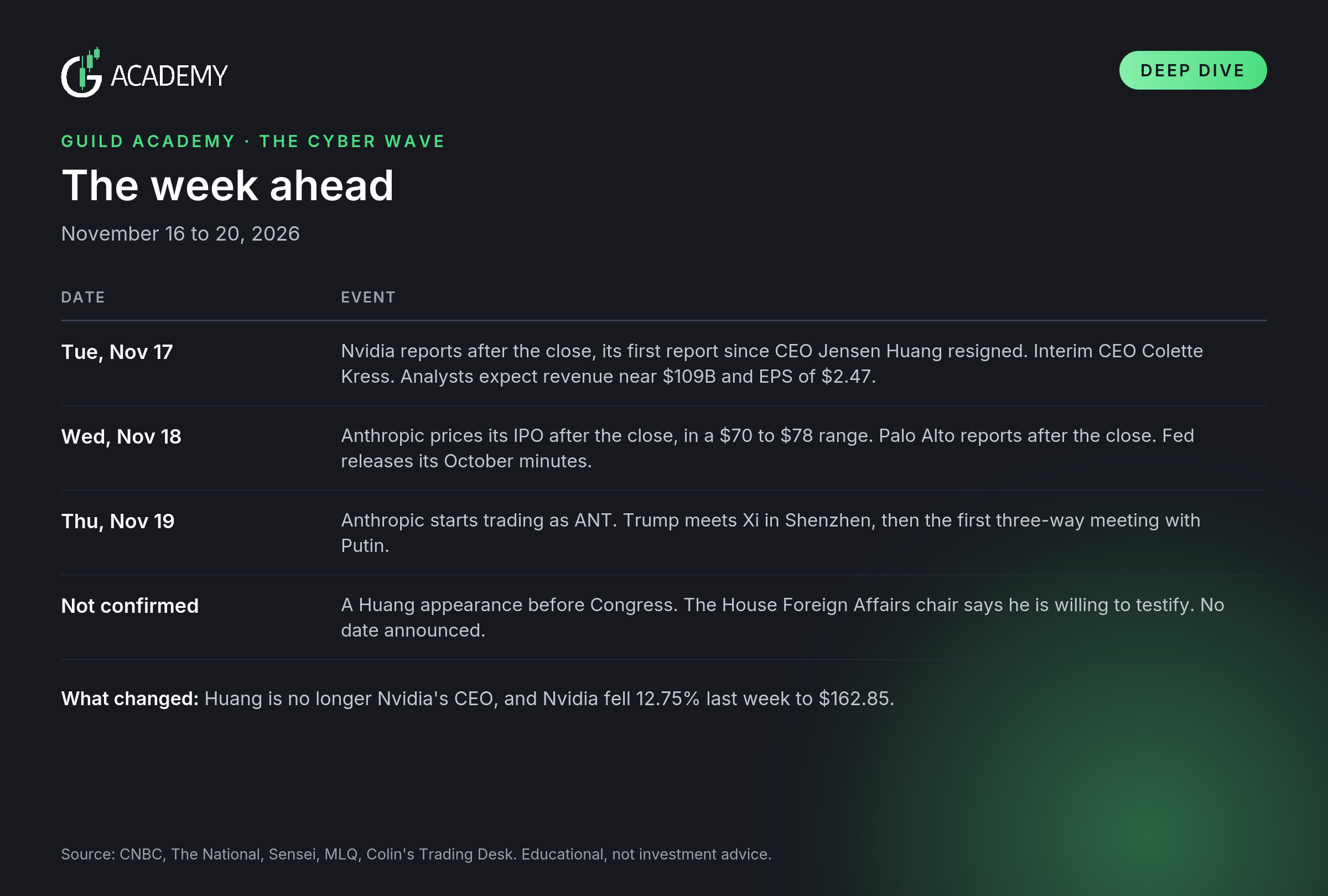
Two facts have changed since the plan was written. Huang is no longer Nvidia's CEO, so the key-man risk discussed in the Nvidia report has already played out, and Nvidia fell 12.75% last week to $162.85. And the Anthropic offering is large: about $64 billion to the public, plus a $26 billion private placement to partners including Google and Nvidia, at a valuation of about $1.3 trillion to $1.45 trillion.
The Anthropic Angle
One claim is that Anthropic is both the problem and the solution, because AI agents can be used by hackers and Anthropic builds AI agents. The facts are narrower:
Officials said they found zero evidence that AI played a role in the FAA outage.
AI is helping find vulnerabilities faster, which is one reason published counts are high. It is also used defensively. Anthropic says it is limiting its most capable model to a small group of organizations for defensive security work, under a program it calls Project Glasswing.
What Individuals Can Do
The basics matter more than any single headline:
Use a password manager, and a unique password for every account.
Turn on multi-factor authentication, especially for email and money accounts.
Keep devices and apps updated.
Back up important files in more than one place, including one copy that is offline.
Check official sources before sharing alarming claims about outages and attacks.
Risks
Events can reverse. An outage can lift cyber stocks, and a quick fix or a rebuttal can end the move.
The group has run. CrowdStrike is up about 102% and Palo Alto roughly doubled this year, so expectations are high.
Fastly is small and volatile. A stock that moved 41% in a month can move that much the other way.
Options can lose everything. January calls need the move to arrive on time.
A busy week. Nvidia, Anthropic, Palo Alto, the Fed minutes and the Trump meetings all land within four days.
Contested claims. The reserved-vulnerability trend is unverified, and the causes of Friday's outages are still under investigation.
None of this is a recommendation to buy or sell anything. It is what the facts and the thesis suggest, so that existing plans can be reviewed with context.