Deep Dive: Prepare, Don't Panic
This week's outages set off a wave of advice to stockpile supplies and pull money out of banks. The thesis here is that the right response is calm, small and reversible: prepare for a few days without normal services, and keep your savings where they are insured.
What Set Off the Fear
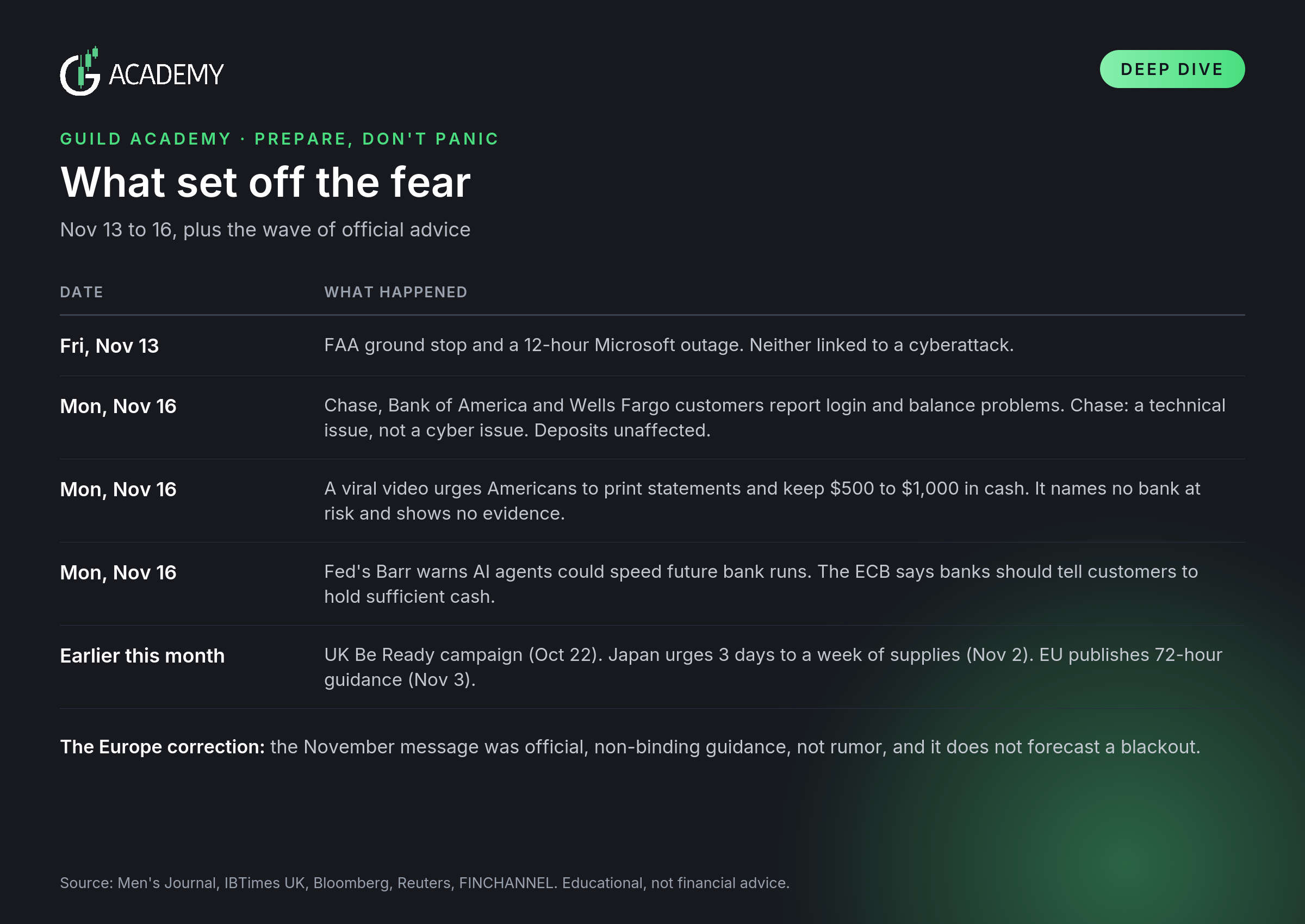
The Bank Run Question
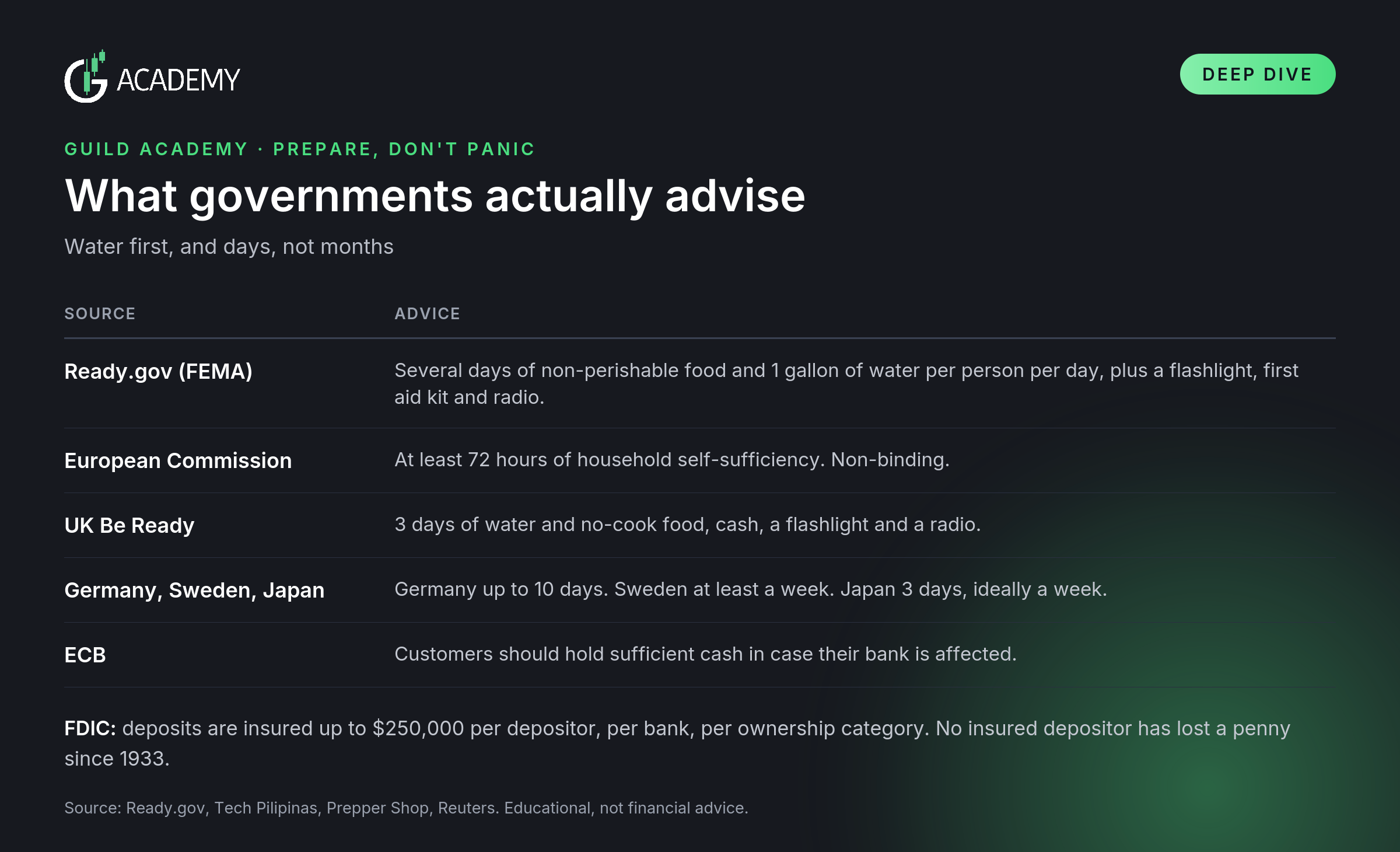
What protects deposits. Deposits at FDIC-insured banks are covered up to $250,000 per depositor, per insured bank, per ownership category. The FDIC says no depositor has lost a penny of insured funds since it was founded in 1933. An app or login outage is a technical problem, not a bank failure: the money is still in the account.
How a run starts. A bank run happens when many people withdraw at once because they fear the bank will fail. Even a healthy bank can be hurt, because it only holds a fraction of deposits in cash. Social media made this faster in 2023, when a congressman called the Silicon Valley Bank episode the first Twitter-fueled bank run, and officials now worry that AI agents could make it faster still.
That supports the thesis's main point. Urging people to pull money out of banks is the behavior that can start a run, so the advice to empty accounts is the risky part of this week's advice, not the safe part.
Cash is not the same as emptying the bank. Holding some cash is mainstream advice. The UK campaign lists cash among its basics, and the ECB wants customers to hold sufficient cash. The difference is the size. A small reserve of small bills for a few days is a preparation. Moving savings out of insured accounts is a bet that the banking system will fail.
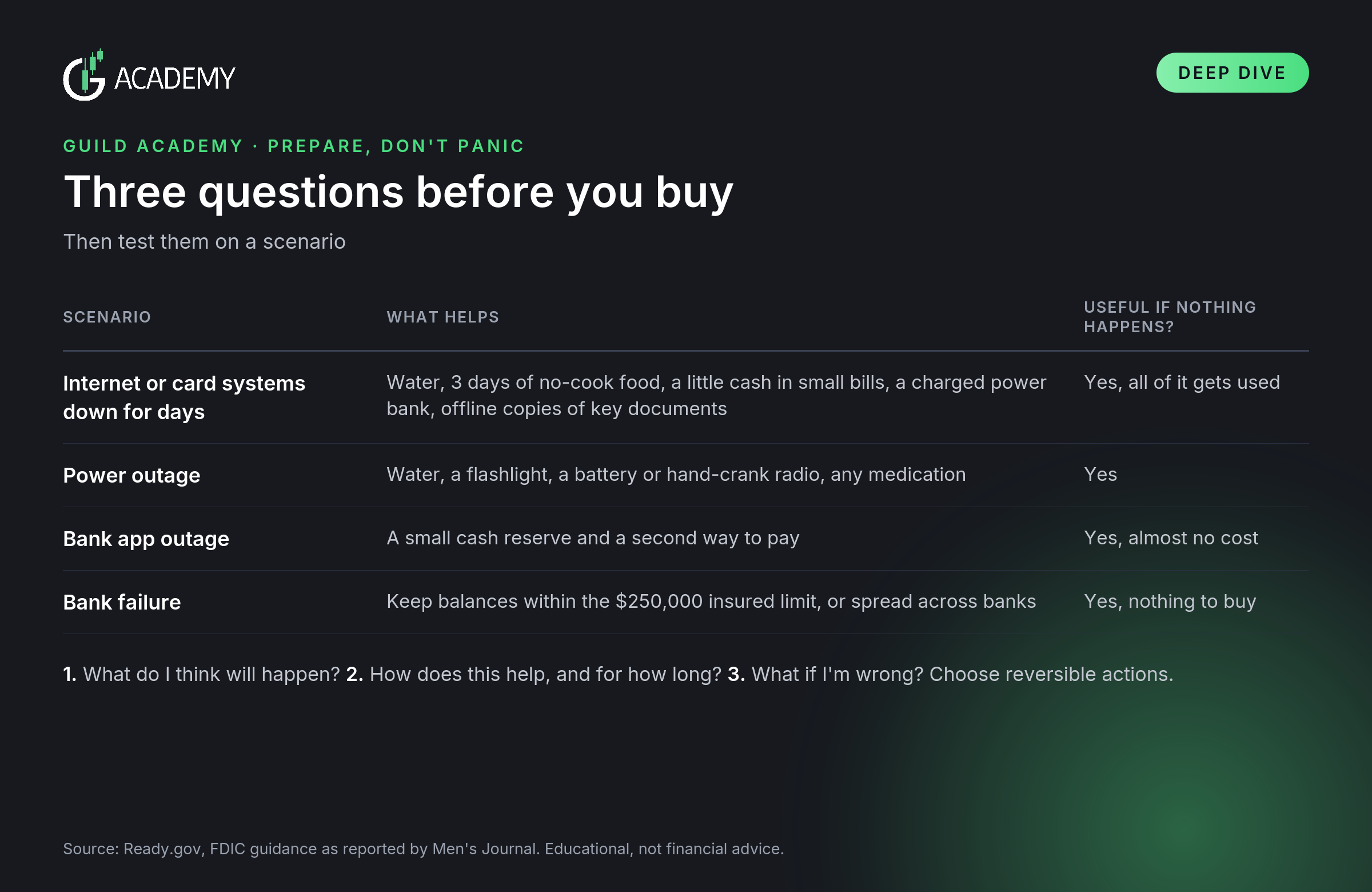
Three Questions Before You Buy Anything
The framework is three questions:
What do I think is going to happen? Name the scenario, such as civil unrest, a power failure or an internet outage. Without one, there is nothing to prepare for.
How will this help in that scenario? Ask how access to it changes the day before and the day after, and how long the situation lasts.
What if I'm wrong? This is the most important question. Choose actions that are easy to reverse, that cost little and that do not affect your life or investments if nothing happens. Don't buy things you won't use.
Here is how it works for common scenarios:
What Governments Actually Advise
The Market Angle
The thesis is to use the event to trade, not to stockpile. The cyber reports show why to be careful: Friday's lift in cyber stocks faded by Monday, and a busy week of Nvidia, Palo Alto and Anthropic is still ahead. Preparing for a few days costs little and does not depend on what the market does.
Risks and Caveats
Nothing ever happens is a base rate, not a guarantee. Small, cheap preparation is the hedge for the rare time it does.
Panic works against you. Large withdrawals and expensive purchases can cost more than the event itself.
Several claims are unverified. The bank-run intent and the forked-internet scenario have no supporting reporting.
Outages can still be real. An app outage can leave you without access for hours even when the money is safe.
This is not financial or safety advice. Check your own situation, and follow official guidance for your country.