Deep Dive: Kevin Warsh, the "Debasement Trade," and the Fed Decision That Could Reshape Markets T...
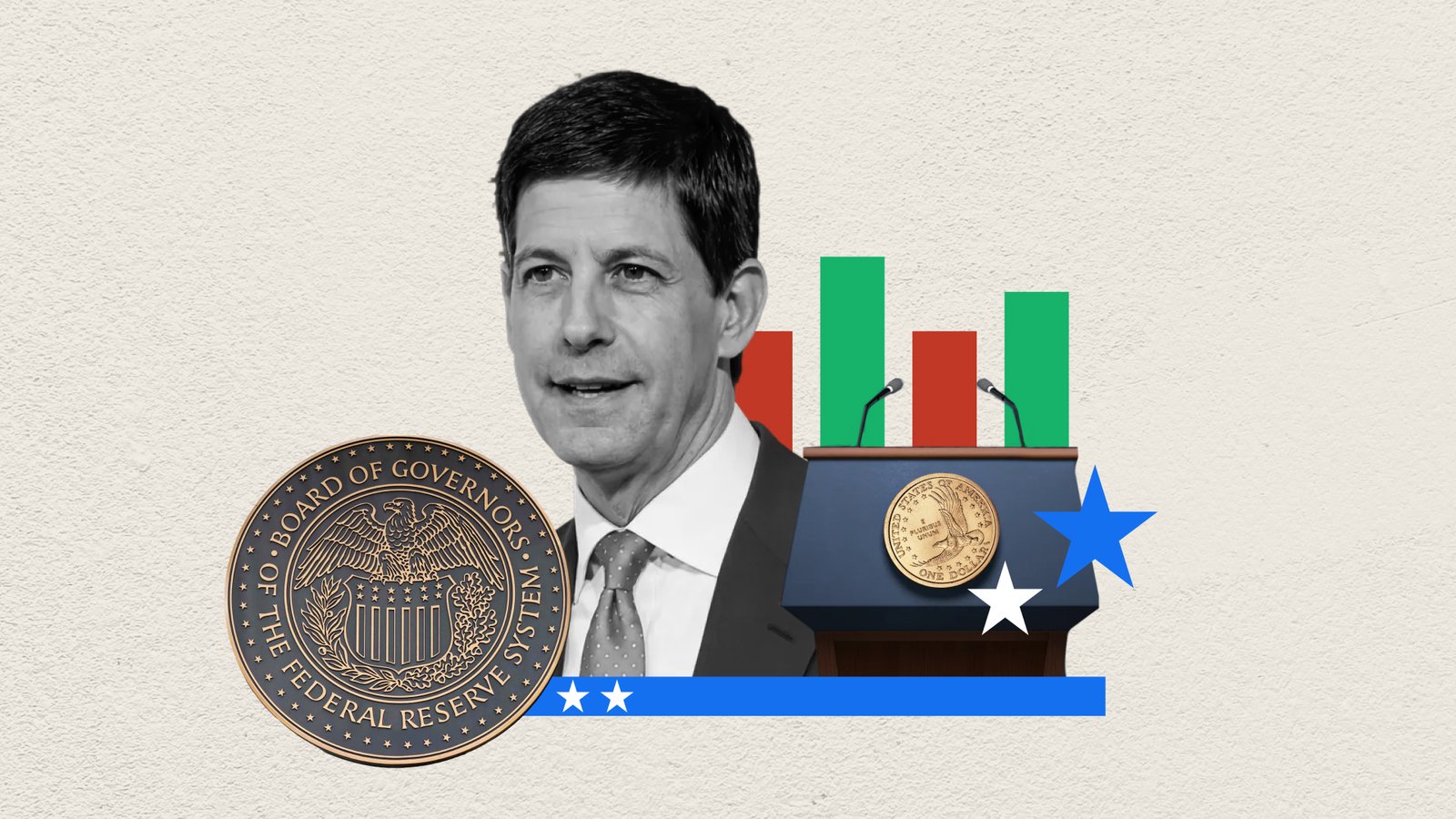
If you've been watching gold, the dollar, or Bitcoin whipsaw over the past two weeks and wondered what's actually driving it, the answer traces back to one man, one speech, and a genuinely unusual standoff between two arms of the US government.
Who Is Kevin Warsh, and Why Does His Fed Actually Feel Different?
Kevin Warsh isn't a typical Fed chair pick, and that matters for understanding everything that's happened since. He was the youngest-ever Federal Reserve governor, appointed at 35 in 2006, and sat on the board through the entire 2008 financial crisis working alongside Ben Bernanke. He left in 2011 for an unusual reason: he publicly broke with the Fed's bond-buying (quantitative easing) program, warning about its long-term inflation risks, years before that became a mainstream critique.
That history matters because it tells you Warsh came into this job as a known skeptic of easy money, not a Powell-style continuity pick. President Trump nominated him in January 2026 after a long, public feud with outgoing Chair Jerome Powell, and the Senate confirmed Warsh in the most divisive Fed confirmation vote in history, 54-45. He was sworn in on May 22, 2026, and his very first major public test as chair came at the annual Jackson Hole symposium on August 28.
The Treasury Just Made His Job Much Harder
Here's where the story gets genuinely unusual. Just days before Warsh's Jackson Hole speech, Treasury Secretary Scott Bessent announced the Treasury would at least double its buybacks of long-dated (10-30 year) government bonds, from $2 billion to $4 billion per operation, explicitly to push long-term yields lower. Bessent even said the amount could go higher, and left the ceiling deliberately undefined.
That's an odd move for a government to make while its own central bank is independently deciding whether to raise interest rates. Effectively, the Treasury was trying to ease financial conditions through the back door, right as markets waited to see whether the Fed chair would tighten them through the front door. Markets read this as a signal that Washington doesn't trust the bond market to price US debt fairly on its own, and investors responded exactly the way you'd expect: by buying assets that governments can't simply print or issue their way out of. Gold and Bitcoin both jumped sharply. Traders call this pattern the "debasement trade", the bet that when a government appears unable or unwilling to manage its debt without eventually letting inflation erode it, hard, unprintable assets become the safer bet. Gold actually gained roughly 14% in August alone, its strongest single month this century, largely on this trade.
Then Warsh Spoke, and Flipped the Script
This is the pivot point. Markets widely expected Warsh's Jackson Hole speech to be a non-event, he's known for avoiding forward guidance. Instead, he delivered what multiple analysts called a genuinely hawkish surprise. The key lines: PCE inflation (the Fed's preferred gauge) is running at 3.7% over the past year and 4.1% annualized over the last six months, both well above the Fed's 2% target. He said the labor market is effectively at full employment, and that he'd be "hard pressed to describe broad financial conditions as restrictive." Then the line that moved markets most: "We must be confident that underlying inflation is moving to our objective, clearly and at sufficient speed. Otherwise, we have work to do."
That's about as close as a Fed chair gets to saying "a rate hike is genuinely on the table" without saying it outright. And crucially, it directly undercut the Treasury's easing effort from days earlier, setting up what analysts described as the Fed and Treasury working at cross-purposes.
The Market Reaction, in Numbers
The repricing was immediate and large:
Rate hike odds for September jumped from around 35-40% before the speech to as high as 59-66% by the following Monday, depending on which pricing source you check (CME FedWatch, Polymarket, Kalshi all moved in the same direction).
Gold fell sharply, giving back a meaningful chunk of its August "debasement trade" gains as the hawkish pivot strengthened the dollar.
The 2-year Treasury yield, the part of the bond market most sensitive to near-term Fed moves, jumped to its highest level since late July.
The dollar gained broadly across major pairs.
Not Everyone Is Convinced This Actually Happens
Here's the genuinely balanced part of this story worth sitting with: several serious voices think the market may be overreacting. JPMorgan Asset Management's David Kelly wrote that "the economy doesn't have quite as much momentum as Kevin Warsh suggested," and that markets "may have been premature" in pricing a 60%+ hike probability. Miller Tabak's Matthew Maley went further, suggesting Warsh may be talking up inflation risk now specifically so he can claim credit later when headline inflation numbers naturally cool. On the other side, Aberdeen's Matthew Amis told the Financial Times the speech "sets up a September meeting where if they don't hike, credibility will take another bash," essentially arguing Warsh has now backed himself into a corner where not hiking would look weak.
Deutsche Bank stands out as the most aggressively hawkish house on this, forecasting 50 basis points of hikes this year, in September and December.
What Actually Happens Next
The Fed's rate decision lands September 16, but it's not the only thing that matters between now and then. The Fed will get a full run of labor, housing, and consumer spending data first, and several analysts specifically flagged the jobs data as the wildcard that could pull odds back down if it comes in weak, exactly the kind of tension we flagged in our own Forex Today and XAU Desk posts this week around Friday's Non-Farm Payrolls release.
Why This Matters Beyond One Speech
This is a genuinely useful case study in how markets actually work, not because Warsh is right or wrong about inflation, but because it shows two things clearly:
Fiscal and monetary policy can pull in opposite directions, and when they do, markets have to referee the fight in real time. That's precisely why gold, the dollar, and short-term yields have all been so volatile these past two weeks, they're pricing a genuine, unresolved conflict between the Treasury's desire for easier conditions and the Fed's stated inflation mandate.
A single, carefully-worded speech moved rate-hike odds by 20-30 percentage points in days. That's the kind of event-driven volatility that rewards having a plan (and stop-loss discipline) going into known catalysts, rather than assuming "quiet" macro weeks stay quiet.